Table of Contents
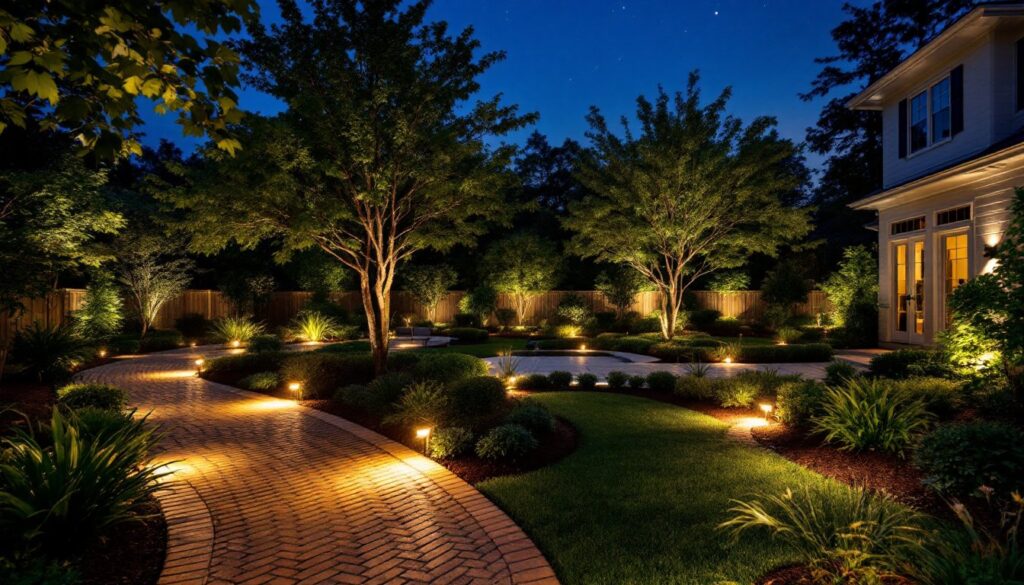
ToggleMost homeowners wait until dark to realize their backyard has zero ambiance. Pathways disappear, landscaping features vanish, and that carefully planted garden becomes invisible after sunset. The good news? Wholesale landscape lighting doesn’t have to drain your budget. Buying in bulk through wholesale suppliers gives you access to professional-grade fixtures at prices typically reserved for contractors. Whether you’re illuminating a sprawling property or just want to make your entryway safer and more inviting, understanding the wholesale market lets you skip the retail markup and invest more in quality. This guide walks you through finding the right fixtures, comparing suppliers, and installing landscape lighting that actually transforms your outdoor space.
Key Takeaways
- Wholesale landscape lighting offers 30-50% savings compared to retail by eliminating markups and combining bulk discounts with DIY installation.
- LED fixtures dominate the wholesale market, using 75-80% less energy than older technology while lasting 25,000+ hours, making them the most cost-effective choice per fixture.
- Plan your layout before purchasing by sketching your property, estimating fixture counts, and calculating cable runs to ensure proper transformer capacity and avoid over-ordering.
- When comparing wholesale suppliers, verify minimum order quantities, volume discounts, voltage compatibility (12V or 24V low-voltage preferred for DIY), and total cost-per-fixture after discounts.
- Maintenance for wholesale landscape lighting is minimal with LED fixtures—rinse lenses twice yearly, check connections annually, and replace LED modules rather than entire fixtures when repairs are needed.
Understanding Wholesale Landscape Lighting Benefits
Buying wholesale landscape lighting cuts costs in several concrete ways. First, you sidestep the retail markup, typically 40-60% higher than wholesale pricing. Second, bulk purchases often qualify for additional discounts, case quantities, or volume breaks. Third, wholesalers stock professional-grade components that last longer and perform better than consumer-grade alternatives you’d find at a big-box store.
Beyond price, wholesale suppliers often provide technical support. They help you select fixtures matched to your voltage system, understand cable requirements, and troubleshoot installation issues. You also gain access to a wider range of styles and finishes, not just the five standard bronze options stocked at retail chains.
One honest caveat: wholesale purchases usually require minimum order quantities (sometimes 5-10 fixtures per style). This works perfectly if you’re lighting an entire property or splitting an order with neighbors, but it doesn’t suit tiny projects. Also, most wholesalers sell to contractors and registered businesses first: some require a reseller license or contractor credentials. Check before assuming you can walk in and buy. Many wholesalers now accept direct homeowner orders online, so this barrier is shrinking.
Wholesale lighting also pairs well with DIY installation, where you save further on labor costs. When combined, the total savings on a medium landscape lighting project (30-50 fixtures) often run 30-50% below retail installation.
Types of Wholesale Landscape Lighting Options
LED and Solar-Powered Solutions
LED fixtures dominate the wholesale landscape lighting market for good reason. They use 75-80% less energy than halogen or incandescent equivalents, last 25,000+ hours (versus 1,000-3,000 hours for older tech), and produce crisp, directional light. Wholesale LED pathway lights typically cost $8-15 per fixture when buying 12+ units, compared to $18-25 at retail.
Solar-powered wholesale options are growing fast. A solar path light costs $5-10 wholesale, requires zero wiring, and recharges daily. The trade-off: performance is weather-dependent, and brightness is modest, they work best as supplementary accent lighting rather than primary illumination. They’re ideal if you’re lighting a long walkway and want to minimize trenching for low-voltage cable.
Hybrid approaches make sense too. Run low-voltage (12V) LED spotlights from a single transformer to your key landscape features, then add solar uplights near shrubs or solar path lights along a gravel bed. This cuts trenching labor and balances reliability with solar convenience.
Path Lights, Spotlights, and Accent Fixtures
Path lights (typically 3-6 inches tall) are the workhorse of landscape lighting. Wholesale bulk pricing makes them the most economical choice per fixture. They’re spaced 4-8 feet apart along walkways and driveways. A basic 12V LED path light costs $6-12 wholesale, accepts replaceable LED modules, and mounts on a brass stake or ground collar.
Spotlights direct focused light upward or outward, perfect for trees, architectural details, or focal points. Wholesale LED spotlights range from $15-40 depending on beam angle (30°, 45°, or wider) and casing material (aluminum, brass, or composite). The price jump reflects durability and light output, not just aesthetics.
Accent fixtures include wall-mounted uplights, recessed deck lights, and well lights (sunk into the ground). Wholesale pricing for these specialty fixtures ranges $12-35 each. They’re less common in bulk orders, so per-unit discounts are typically smaller, still better than retail, but buy only what you genuinely need.
When sourcing wholesale fixtures, confirm voltage compatibility. Most landscape lighting runs at 12V or 24V low-voltage (safer for DIY, no permit required). Some commercial-grade fixtures run at line voltage (120V), which requires a licensed electrician and a permit in most jurisdictions. Wholesale suppliers clearly label voltage: match it to your transformer capacity.
How to Find and Compare Wholesale Suppliers
Start by searching “landscape lighting distributor near me” or “wholesale outdoor lighting [your region].” Industry databases like the Landscape Lighting Design tools at ImproveNet show regional suppliers and often include photos and pricing. Many landscape lighting wholesalers are concentrated in regional hubs: if you’re in a major metro area, you’ll have multiple options.
Next, verify minimum order quantities and whether they sell direct to homeowners. Call or email: ask about:
- Minimum case quantities (per fixture or per order)
- Volume discounts (e.g., 10% off at 20 units, 15% off at 50)
- Technical support (do they help with layout and voltage calculations?)
- Warranty and return policy
- Shipping costs if ordering online
Compare total cost-per-fixture after discounts, not advertised price. A supplier quoting $10/fixture with a 20-unit minimum costs $200: another at $12/fixture but with a 10-unit minimum costs $120. The spreadsheet matters.
Research fixture quality by reading contractor reviews and checking for UL or ETL certification (standard safety marks). Avoid no-name brands with suspiciously low prices: they often fail in the first season. Established wholesale brands like Kichler, Landscape Forms, and Hadco maintain consistent pricing and support across wholesalers, so cross-checking prices for the same models is worth the effort.
Don’t overlook online wholesalers, many ship nationwide and have no minimum order or accept smaller quantities with a modest per-unit upcharge. The total landed cost often beats driving to a local distributor and buying a minimum you don’t need. Resources like Gardenista’s landscape lighting collection show retail picks but also give you product names to search wholesale prices for.
Planning Your Landscape Lighting Layout
Plan before you buy. Sketch your property to scale (or use a landscape app and take measurements with a tape). Mark trees, shrubs, walkways, architectural features, and the location of your main power source (typically a patio outlet or basement exterior wall).
Next, list what you want to illuminate:
- Pathways for safety (code often requires pathways to be lit)
- Trees or focal plants (uplighting or downlighting)
- House perimeter for curb appeal
- Deck or patio transitions
- Driveway edges
For each category, estimate the number of fixtures. Path lights spaced 4-6 feet apart down a 40-foot driveway = 7-10 lights. One tree may need 1-3 spotlights depending on size. Modest properties typically need 15-30 fixtures: larger ones, 50+.
Calculate total cable runs. Most 12V systems use 12 AWG (0.082-inch diameter) landscape-rated cable buried 6-12 inches deep in conduit or under mulch. A 200-foot run requires careful transformer capacity planning. Check your transformer’s amp rating, each LED fixture draws minimal current (typically 0.1-0.3 amps), so a 60W transformer (5-amp capacity) handles roughly 20-30 path lights before needing a second transformer.
Transformer location matters. It should sit near the power source (within 50 feet of the outlet) and ideally in a weatherproof cabinet away from foot traffic. Longer cable runs mean voltage drop, the farther fixtures sit from the transformer, the dimmer they become. If your longest run exceeds 100 feet, consider a second transformer or moving fixtures closer.
Sketching a one-line diagram (transformer → cable → fixture count) prevents over-ordering or under-powering. This is where wholesaler tech support earns its keep, email your sketch and they’ll validate your amp calculations for free.
Installation and Maintenance Tips for DIY Projects
Prep work determines success. Before digging, mark cable routes with spray paint or chalk. Bury cable in trenches 6-12 inches deep or snap it into landscape-rated conduit to prevent damage from lawn equipment and foot traffic. Most wholesale suppliers include trenching diagrams in installation guides, follow them exactly.
Set the transformer on a timer or smart switch so lights activate at dusk. Low-voltage transformers plug into a standard outlet: no electrician required. Mount it in a weatherproof cabinet, ideally under an eave or within a lockable junction box away from sprinklers and foot traffic.
When installing fixtures:
- Lay out all lights first (don’t bury cable yet) to confirm placement and spacing.
- Strip cable insulation per the manufacturer’s spec (typically ¾ inch) and connect to fixtures using the included wire connectors or solder and heat-shrink for permanent connections.
- Position lights before burying cable, adjusting angles once buried is maddening.
- Bury cable, then test each fixture before backfilling soil.
- Use a voltage tester to confirm 12V at the farthest fixture: if it’s below 10V, you’ve exceeded that transformer’s capacity and need a second one.
Safety and PPE: Wear work gloves when handling cable and fixtures (sharp edges are common). Safety glasses protect eyes when digging near existing utilities. Verify utility locations with 811 (call before you dig) if you’re trenching deeper than 12 inches.
Maintenance is minimal with LED fixtures. Rinse lenses with a hose twice yearly to remove pollen and dirt. Check connections annually, corrosion can occur at wire terminals exposed to moisture. If a fixture fails, most wholesale fixtures accept drop-in LED replacement modules ($3-8) rather than replacing the entire $12+ fixture.
For seasonal climates, unplug the transformer if you don’t run lights through winter to prevent transformer coil damage in extreme cold. Drain trenches or use conduit to prevent water pooling around fixtures.
Wholesale lighting often comes with 1-2 year manufacturer warranties covering electrical failure but not physical damage or neglect. Keep receipts and documentation, warranty claims usually require proof of purchase.