Table of Contents
ToggleThe right lighting can make or break a living room. A poorly lit space feels cramped and uninviting, while thoughtful illumination turns an ordinary room into a sanctuary where you actually want to spend time. Ambient lighting, the soft, overall glow that fills a room, is the foundation of any good lighting design. Unlike task lighting focused on reading or work areas, ambient lighting creates mood and makes a space feel complete. Whether you’re starting fresh or upgrading an existing setup, understanding how to layer and position lights will transform your living room into a warm, functional haven. This 2026 guide walks you through the essentials of ambient lighting for living room design, from fixture selection to smart controls.
Key Takeaways
- Ambient lighting for living rooms should layer three types of illumination—ambient, task, and accent light—to create flexibility and avoid harsh shadows from relying on a single overhead fixture.
- Warm color temperatures between 2700K and 3000K provide the most inviting atmosphere for living spaces, while cooler temperatures above 4000K should be avoided unless you want an energetic, contemporary feel.
- Smart dimmers and smart bulbs offer cost-effective ways to adjust brightness and color temperature from your phone, letting you adapt the mood from energizing (for cleaning and entertaining) to relaxing (for movies and unwinding).
- Wall sconces mounted at 60-66 inches and recessed lights spaced 4-6 feet apart are superior to single ceiling fixtures because they distribute light evenly and eliminate unflattering shadows on faces.
- Test your ambient lighting setup with temporary solutions like floor lamps and LED strips for at least a week before installing permanent fixtures to ensure proper placement and brightness for your actual furniture layout.
- Budget-friendly plug-in solutions—floor lamps, smart bulbs, and adhesive LED strips—transform any living room without rewiring, making them ideal for renters or those starting their lighting upgrade journey.
Why Ambient Lighting Matters in Your Living Room
Ambient lighting is the unsung foundation of any well-designed living room. It fills the entire space with soft, diffused light that reduces harsh shadows and creates an inviting atmosphere. Without it, even a beautifully decorated room feels sterile or cave-like.
Proper ambient lighting serves multiple purposes. It allows you to move safely through the room without tripping over furniture or pets. It sets the emotional tone, warm, dim light signals relaxation, while brighter light energizes the space. It also balances other lighting types: task lighting (like a reading lamp) and accent lighting (highlighting artwork) need ambient light as a backdrop to avoid creating stark, unwelcoming pools of brightness.
The key is layering. A single overhead light almost never works well in living rooms. It tends to cast shadows on faces, washes out colors, and lacks the flexibility to match different moods throughout the day. Visual Comfort Lighting: Transform explores how proper light placement directly impacts how you feel in a room, and ambient light is the cornerstone of that experience.
Understanding the Three Types of Lighting Layers
Professional designers use three overlapping layers to create balanced, functional lighting. Understanding each layer helps you plan living room ambient lighting ideas that actually work.
Ambient Light is the baseline, general illumination that fills the entire space. This comes from ceiling-mounted fixtures, wall sconces, or uplighting that bounces off ceilings. It’s the “always on” layer that lets you navigate safely and sets the overall mood.
Task Light targets specific activities: reading, conversation, games, or assignments. Table lamps, floor lamps, and desk lights provide this focused brightness. Task lighting shouldn’t rely solely on ambient light, but it shouldn’t exist in isolation either. That’s where the third layer comes in.
Accent Light highlights decorative elements: artwork, architectural details, plants, or built-in shelving. Picture lights, track lights, and uplighting add depth and draw the eye to what matters. Accent lighting is optional in a basic setup but transforms an ordinary room into a designed space.
Combine all three, and you get flexibility. You can brighten the whole room for cleaning or entertaining, dim ambient light for movie night, or focus task light on reading while keeping the rest dim. Pro Trade Lighting: Enhancing Your Space With Quality Illumination demonstrates how layering creates spaces that adapt to real life, not magazine spreads.
Best Fixtures and Placement Strategies for Ambient Lighting
Choosing the right fixtures and placing them correctly separates a well-lit room from an awkward one. Here’s what works:
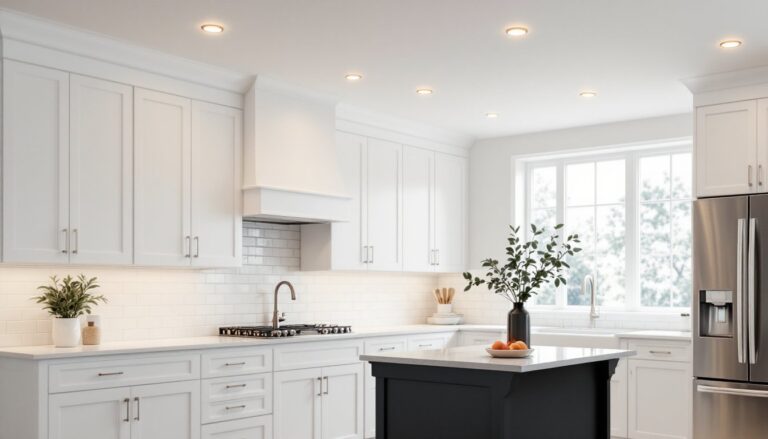
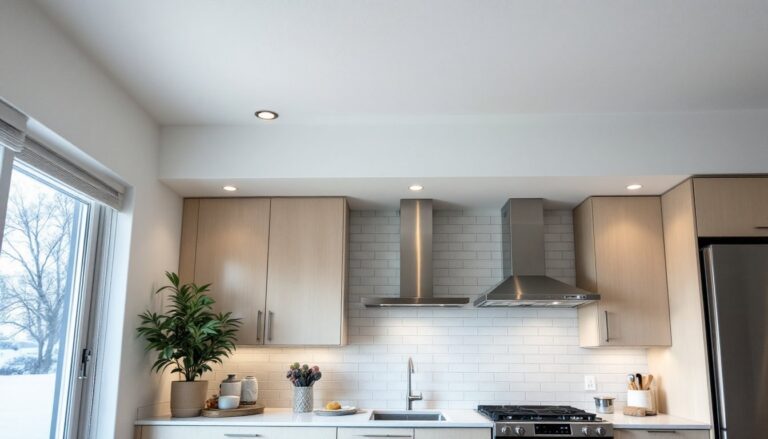
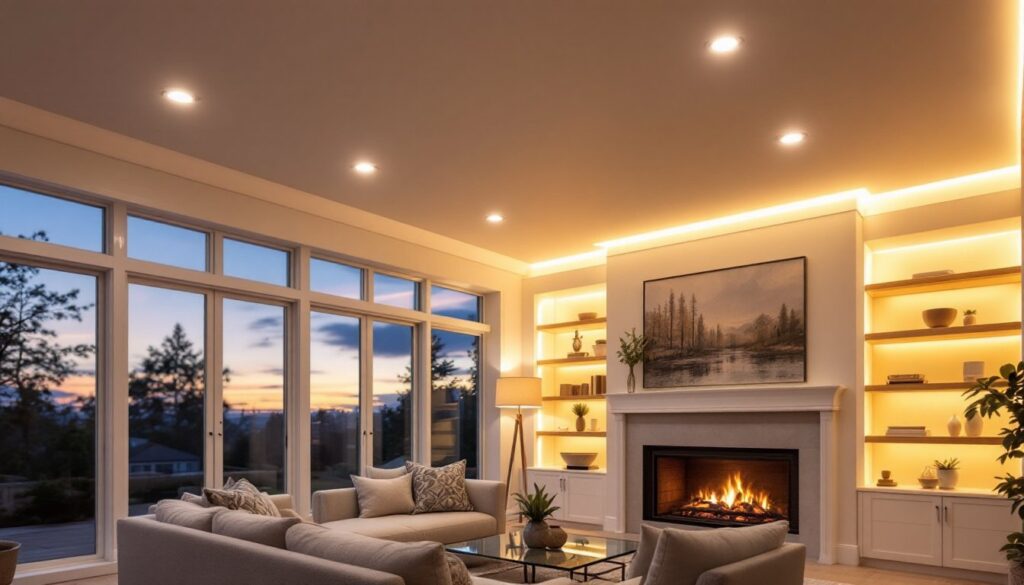
Recessed Lighting provides clean, unobtrusive ambient light. These 3-inch to 4-inch fixtures fit flush into the ceiling and distribute light downward. For a typical 12′ x 14′ living room, space them about 4 to 6 feet apart in a grid pattern to avoid dark corners. Recessed lights work best with dimmers, and matching them with warm color temperatures (2700K to 3000K) prevents that harsh, institutional feel. Recessed Lighting Housing: A Comprehensive Guide to Brighten Your Space covers installation details if you’re wiring these into existing ceilings.
Wall Sconces mounted at 60 to 66 inches from the floor provide soft, diffused light without overwhelming the space. Place them flanking a fireplace, framing a window, or lining a hallway entry. They work especially well in smaller rooms or where ceiling height is limited.
Ceiling-Mounted Fixtures offer a simpler alternative to recessed lights. A flush-mount or semi-flush fixture with a fabric shade softens the light. Avoid bare, exposed bulbs: they create glare and shadows.
Cove Lighting uses fixtures hidden along the top of walls or built-ins to bounce light off the ceiling. This indirect approach feels luxurious and eliminates glare. It’s perfect for living room ambient lighting ideas that prioritize mood over brightness.
Place fixtures to avoid throwing light directly into seating areas, angled or diffused light feels more welcoming than a spotlight effect. Test before you commit.
Smart Lighting and Color Temperature Tips
Smart lighting transforms ambient light from static to adaptive. Dimmers are the cheapest upgrade: they let you adjust brightness from 100% (movie night prep, cleaning) down to 10% (relaxation, entertaining). Install dimmers rated for your bulbs, LED, incandescent, and CFL all require compatible dimmers.
Smart bulbs (Wi-Fi or Zigbee-enabled) let you change brightness and color temperature from your phone. You can schedule lights to brighten gradually at sunrise or dim at sunset, mimicking natural light rhythms. This costs more upfront but adds flexibility without rewiring.
Color temperature matters enormously. Measured in Kelvins (K), it defines how “warm” or “cool” light feels:
- 2700K (Warm White): Soft, amber-toned, mimics incandescent bulbs. Best for living rooms, it’s inviting and relaxing.
- 3000K (Neutral White): Slightly crisper, still comfortable. Works well in modern spaces.
- 4000K+ (Cool White): Bright, bluish. Better for kitchens or offices: avoid in living rooms unless you want a contemporary, energetic vibe.
Mix color temperatures carefully. Mismatched bulbs (some 2700K, some 4000K) look amateurish. Stick to one temperature throughout ambient and task lighting: use accent lighting to add visual interest. Some experts recommend slightly brighter accent lights (5000K) to add contrast without harshness. Test strips of LED tape in different temperatures before committing.
DIY Installation and Budget-Friendly Ideas
You don’t need a contractor to improve living room lighting. Many upgrades are rentable-friendly or doable with basic tools.
Plug-In Solutions (no wiring required):
- Floor and table lamps with diffusing shades add instant warmth. Budget-friendly and moveable.
- Smart bulbs screw into existing fixtures. Replace one bulb at a time.
- Adhesive-back LED strip lights stick along shelves or cove edges. Hide the transformer behind furniture.
- Uplighters sit on the floor pointing at the ceiling, bouncing light around the room. Rental-friendly.
Simple Hardwired Upgrades (contact a licensed electrician):
- Wall sconces require a junction box and local circuit: plan on $200–$400 per fixture installed, depending on wire routing.
- Recessed lights in an existing ceiling typically run $150–$250 per fixture if you already have access from above. New drywall cuts cost more.
- Dimmer switches are the simplest upgrade, replace a standard switch. Cost: $15–$50 per dimmer, plus installation if you’re not comfortable with wiring.
Budget Tip: Start with lamps and smart bulbs. These cost under $100–$200 total and work in any room. If you rent, this approach is ideal. Recessed Lighting: Transform Your explains permanent fixtures if you’re planning to stay put.
Safety: Always kill the breaker before touching wiring. Wear safety glasses and work gloves if you’re handling fixtures or running cable. If you’re uncomfortable with electrical work, hire a professional, mistakes can cause fires.
Common Mistakes to Avoid When Designing Ambient Lighting
Skip these pitfalls and you’ll nail your living room lighting on the first try.
Relying on a Single Overhead Fixture: This is the #1 mistake. One ceiling light creates harsh shadows and offers no flexibility. Layer fixtures instead.
Mismatched Color Temperatures: Warm and cool light in the same room looks jarring and unfinished. Commit to one temperature, 2700K for traditional or cozy: 3000K for modern.
Forgetting About Dimmers: Even if you can’t rewire, install a dimmer switch on existing circuits (or use smart bulbs). Ambient light needs to adjust from energizing to relaxing.
Over-Brightening: Ambient light should be 60–80% of maximum brightness during normal use. Too bright and the room feels sterile: too dim and it’s depressing. Test settings before finalizing.
Ignoring Glare: Bare bulbs, uncovered recessed lights, or fixtures pointed at eye level cause discomfort. Always use diffusers, shades, or angled placement. This applies even to accent lighting.
Skipping the Test Phase: Don’t install permanent fixtures without prototyping. Use extension cords, clip lamps, and tape to test placement and brightness for a week. Move things around. Adjust color temperature. Only commit once you’re certain.
Overlooking Furniture Placement: A light positioned perfectly for an empty room might be blocked by a sofa once it arrives. Plan layouts together. Pendant Lighting: Transform Your covers how fixture style interacts with furniture, too.
Conclusion
Ambient lighting isn’t complicated, but it requires intentionality. Start with a clear picture of how you use your living room, relaxing, entertaining, working, watching movies, then layer fixtures that support those activities. Warm light at 2700K to 3000K, distributed evenly across the room with dimmers, is the gold standard. Test before you commit, and don’t hesitate to mix permanent and temporary fixtures as you refine your design. A well-lit living room isn’t an accident: it’s the result of small, smart choices that pay dividends every single day.