Table of Contents
ToggleLantern pendant lighting has earned its place in home design because it works, functionally and aesthetically. Unlike trendy fixtures that fade in a few years, lantern pendants deliver both ambient light and visual character that fits everything from farmhouse kitchens to modern lofts. Whether you’re renovating a space or just swapping out an outdated chandelier, lantern pendant lights offer versatility, durability, and a timeless appeal that doesn’t rely on gimmicks. This guide walks you through what makes them effective, where to hang them, how to choose the right style for your home, and what you need to know to install them correctly.
Key Takeaways
- Lantern pendant lighting combines timeless design with practical functionality, offering versatile ambient light and visual character that works across farmhouse, modern, industrial, and minimalist décor styles.
- Proper height placement is critical: hang lantern pendants 30–36 inches above kitchen islands or tables for optimal task lighting, and 7–8 feet above entryway floors to avoid obstructing sight lines.
- When selecting a lantern pendant, choose a fixture width about 1/3 the width of the surface beneath it, and match the finish (bronze, black, brass, or nickel) to your existing cabinetry and hardware for visual harmony.
- Glass panels in lantern pendants provide better ambient light diffusion and task lighting, while open metal cage designs offer more visual interest and dramatic shadowing effects.
- For installation safety, always turn off power at the breaker, confirm your electrical box is rated for pendant weight, and position the fixture’s bottom 30–36 inches above countertops with adequate headroom for tall household members.
- Pairing two or three evenly spaced lantern pendants over a long island or table creates better light distribution and visual rhythm than a single oversized fixture.
What Makes Lantern Pendant Lights a Timeless Design Choice
Lantern pendants work because they balance form and function. The enclosed shade controls light direction, reducing glare and spreading illumination more evenly than bare bulbs, while the open or semi-open design prevents the caged, dungeon-like feel of some closed fixtures. Most lantern pendants hang from a chain, cord, or rod, which makes them adjustable and lets you position them at the ideal height for your space.
From a design perspective, lantern pendants draw on centuries of precedent. They reference old gas and oil lanterns, so they carry a sense of authenticity and craftsmanship that feels earned rather than forced. This historical depth is partly why they pair well with almost any décor style: traditional, transitional, industrial, and even minimalist schemes all benefit from a well-chosen lantern pendant.
The fixture’s footprint is also practical. Compared to a chandelier, a lantern pendant occupies less visual space and provides more focused task lighting. You can hang one over a kitchen island, pair two flanking an entryway, or cluster several in a high-ceilinged room without creating visual chaos.
Popular Styles and Design Variations
Lantern pendant lights come in several recognizable categories, and knowing the differences helps you narrow your choice.
Farmhouse and Traditional Lanterns feature seeded or frosted glass panels, often with metal frames in bronze, black, or oil-rubbed finishes. These are workhorse fixtures, durable, forgiving of dust, and at home in rural or cottage-inspired interiors.
Modern and Minimalist Lanterns use clean lines, geometric frames, and often metal cages with minimal or no glass. They’re lighter visually and suit contemporary, industrial, and Scandinavian aesthetics.
Coastal and Nautical Lanterns typically incorporate brass, rope, or weathered finishes and pair well with beach houses and transitional spaces. Glass is usually clear or slightly tinted.
Decorative Metal Lanterns prioritize ornamentation, moroccan-inspired patterns, punched-tin details, or elaborate scrollwork. These make a statement and work best as a single focal point rather than in multiples.
Within each category, you’ll find single-bulb and multi-bulb versions. A single lantern pendant suits intimate spaces or task lighting: multi-bulb clusters work for larger rooms or when you need brighter overall illumination. Most fixtures accept standard E26 medium-base bulbs, so you can use LED, incandescent, or smart bulbs depending on your needs. Check the wattage rating on the fixture label before installing anything stronger than specified.
Where to Install Lantern Pendant Lights for Maximum Impact
Kitchen and Dining Areas
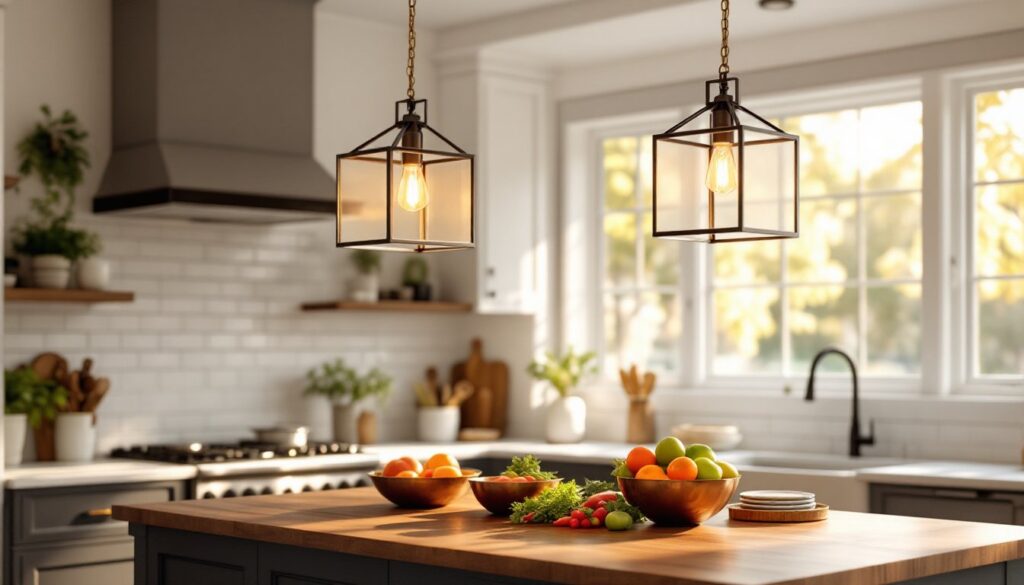
Kitchen islands and dining tables are the classic homes for lantern pendants. Hang a single fixture 30 to 36 inches above the counter or table surface, this height keeps the light functional for food prep or dining without creating glare at eye level. For a longer island (8 feet or more), two or three evenly spaced pendants often work better than one oversized fixture.
In kitchens with vaulted or cathedral ceilings, you can hang pendants lower than standard to create visual warmth and define the work zone. Just ensure there’s enough clearance that taller household members won’t bump their heads. If your island edges sit at 36 inches and your ceiling is 9 feet, a 30-inch drop from ceiling to fixture bottom leaves a comfortable 6 feet of headroom.
Dining rooms benefit from a single larger lantern pendant centered over the table, or a linear run of smaller ones if the table is very long. Pendant lighting makes the dining experience feel intentional, not just lit by the same overhead fixture as the rest of the room.
Entryways and Outdoor Spaces
A lantern pendant in an entryway or foyer creates an immediate sense of welcome. Hang it 7 to 8 feet above the floor (measuring from the floor to the fixture’s lowest point) so it provides ambient light without obstructing sight lines or creating a safety hazard.
For covered porches, covered patios, and screened-in porches, lantern pendants are ideal because the enclosure protects the fixture from rain and direct wind. Use a wet-rated fixture or damp-rated fixture depending on your location’s moisture exposure. Wet-rated fixtures meet UL safety standards for direct spray and are required for areas where water can strike the fixture directly. Damp-rated fixtures suit covered areas where moisture is present but not direct water contact.
Outdoor lantern pendants attract insects more than recessed or flush-mount fixtures, so consider placement carefully if you’re sensitive to bugs. Positioning the light slightly away from seating areas or doors helps mitigate this. Outdoor lighting ideas extend your living space and improve safety: lantern pendants handle both tasks gracefully.
Choosing the Right Lantern Pendant for Your Home
Start by measuring your space vertically and horizontally. Note ceiling height, the surface you’re hanging over (island, table, or floor), and the size of the room. A 12-inch-wide lantern works fine in a small powder room or over a narrow kitchen peninsula, but in a 16-by-20-foot kitchen, it might feel insubstantial. A rough guideline: the fixture width should be about 1/3 the width of the surface beneath it (so for a 36-inch-wide island, a 12-inch pendant is proportional).
Finish is the next call. Oil-rubbed bronze blends with warm wood and earth tones: brushed nickel suits modern and transitional schemes: black adds drama and works in industrial and contemporary spaces: brass or gold brings warmth and pairs well with marble or light wood. If you’re remodeling a room, pick the pendant finish after you’ve chosen cabinet, countertop, and hardware finishes, the pendant should harmonize, not compete.
Glass versus cage is a function decision. Glass panels diffuse light and offer more ambient illumination: open metal cages give a more graphic look and cast interesting shadows. If your primary goal is task lighting over an island, glass performs better. If you want visual interest and don’t mind more directional light, a cage lantern works.
Check the fixture’s socket type and wattage rating. Most modern lantern pendants use standard E26 medium-base sockets and are rated for 60W incandescent or equivalent. If you choose LED bulbs, you can drop to 10–15W and still get plenty of light. Smart bulbs (WiFi or Bluetooth-enabled) are an option if you want dimming without a separate dimmer switch.
Inside the fixture’s packaging or on the retailer’s page, confirm the hanging hardware included: chain, wire, or cord. Some fixtures come with adjustable-height hanging systems that let you modify drop length after install, a handy feature if your ceiling height isn’t standard. Designer-favorite pendant lights show current trends and give you reference points for quality and style. Top pendant lights from interior designers also provide curated selections across price points.
Installation and Lighting Tips
Before You Start
Turn off power at the breaker before touching any wiring. If you’re unsure whether the existing outlet has a junction box rated for the pendant weight, have an electrician confirm. Lantern pendants are typically lightweight (2–6 pounds), but improper mounting can cause fixtures to sag or fall.
If you’re installing a new pendant over an island without existing overhead wiring, running new electrical is a permit job in most jurisdictions. Hire a licensed electrician rather than attempting to route wires through walls or ceilings without proper technique and inspection.
Installation Steps
-
Prepare the ceiling. If there’s an existing fixture, shut off the power, remove the old fixture, and disconnect its wires. Most pendant installations use a standard pancake electrical box. If you’re starting from scratch, have the electrician install a new box rated for pendant weight.
-
Install the canopy (the trim ring that covers the hole). Slide it over the chain or cord and use the mounting screws provided to attach the fixture’s bracket to the electrical box.
-
Attach the bulb and shade. Once the canopy is secure, install your bulb, then thread the shade or shade holder onto the fixture according to the manufacturer’s instructions.
-
Adjust height. If you have a chain, remove links to shorten the drop, or add links (if extras came with the fixture) to lengthen it. For a single pendant over a 36-inch island, aim for the bottom of the fixture to be 30–36 inches above the countertop.
-
Test before finishing. Restore power at the breaker, flip the switch, and verify the light comes on. If it doesn’t, check that the bulb is secure and the circuit breaker is in the correct position.
Lighting Performance Tips
Bulb choice matters. A warm white LED (2700K–3000K) creates a cozy, hospitable mood and pairs well with wood and traditional finishes. Cool white (4000K–5000K) feels more contemporary and energetic. For dining, warmer light is generally more flattering: for kitchens, some people prefer a neutral or cool tone for task visibility.
Use a dimmer if possible. Installing a dimmer switch lets you adjust light intensity for different times of day and activities. Most LED bulbs sold today are dimmer-compatible, but verify the label. If your lantern fixture has multiple bulbs, a dimmer controls all of them simultaneously.
Cluster for impact. Two lantern pendants hung 3–4 feet apart over a long island or dining table create rhythm and distribute light more evenly than a single larger fixture. Keep them at the same height using a measuring tape during install.
Lantern pendants for dining rooms showcase how pairs and multiples elevate a space. You’ll also discover how pendant lighting transforms rooms by combining style and function in ways that feel effortless.