Table of Contents
ToggleBad bathroom lighting doesn’t just make you look tired, it actually is tiring. When you’re standing at the sink every morning and evening, you need light that’s bright enough to see what you’re doing but flattering enough not to highlight every pore. Vanity bathroom lighting is where function meets form, and getting it right can transform your entire bathroom experience. This guide walks you through choosing, installing, and styling vanity fixtures that work for your space and your face.
Key Takeaways
- Vanity bathroom lighting directly impacts grooming accuracy and mood by providing function and form, with proper illumination improving focus at the sink every morning and evening.
- Wall-mounted sconces placed 36 to 40 inches above the floor on either side of your mirror eliminate harsh shadows and mimic natural light, making them the gold standard for vanity bathroom lighting.
- Aim for 4,000 to 8,000 lumens total brightness at your vanity with a color temperature between 3,000K to 4,100K for flattering, daylight-mimicking light that shows true colors.
- LED bulbs are the most efficient choice for vanity fixtures, but invest in mid-range, flicker-free brands and confirm dimmer compatibility before purchasing for the best results.
- Before any installation, turn off power at the breaker box and use a voltage tester to confirm the circuit is dead; hire a licensed electrician if running new circuits or unsure about local electrical codes.
- Coordinate vanity light finishes with your faucet and cabinet hardware to create a cohesive bathroom aesthetic, and choose timeless finishes like brushed nickel or brass that resist looking dated over time.
Why Vanity Lighting Matters More Than You Think
Your bathroom vanity is ground zero for grooming, shaving, makeup application, skincare routines, teeth whitening. The lighting here directly affects how well you see and how you look to others. Poor vanity lighting causes you to apply makeup unevenly, miss stubble, or create shadows that don’t exist in daylight. Worse, it wastes time as you adjust and readjust because something feels off.
Beyond function, vanity lighting sets the mood for your bathroom. It influences whether a small bathroom feels cramped or cozy, and whether a large one feels inviting or sterile. The right fixture becomes a design anchor that ties together your mirror, cabinetry, and overall aesthetic. Studies on lighting psychology show that proper illumination actually improves focus and mood, no small thing when you’re groggy at 6 a.m.
Types of Vanity Bathroom Lighting Styles
Sconces and Wall-Mounted Fixtures
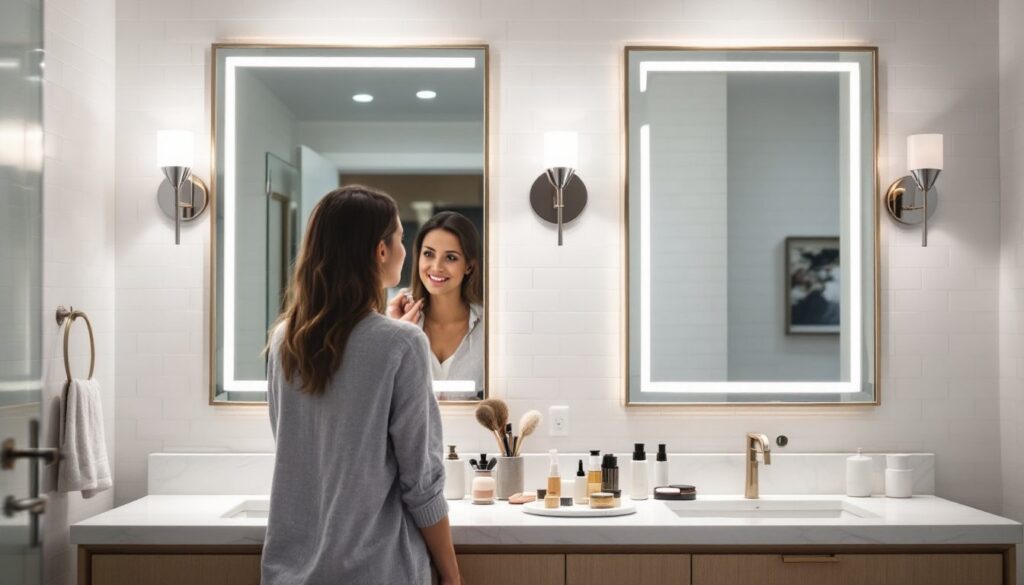
Sconces flanking your mirror are the gold standard for vanity lighting, and for good reason. They place light at eye level and on either side of your face, which mimics natural window light and eliminates harsh shadows. A pair of 2-light or 3-light vanity sconces mounted 36 to 40 inches above the floor (measured to the center of each fixture) works best for most standard mirrors. This height puts the bulbs roughly at eye level when you’re standing at the sink.
Wall-mounted fixtures come in countless styles, industrial Edison bulbs, mid-century modern arms, traditional brass, sleek chrome. When selecting sconces, confirm they accept standard A19 or G25 bulbs (the familiar threaded bases), and check the wattage rating. Most vanity sconces are rated for 60 to 100 watts per socket: don’t exceed the manufacturer’s limit, as it creates fire risk and shortens fixture life.
Installation requires finding studs or using appropriate anchors if you’re mounting between studs. We’ll cover the actual wiring in the installation section, but know now that sconces typically require a hardwired connection to your bathroom circuit, not just a plug-in.
Overhead and Recessed Options
Overhead fixtures, a single flush mount or semi-flush hanging from the ceiling, offer all-over brightness and take up minimal visual space. These work well in smaller bathrooms where wall space is tight or where you want a cleaner, less-decorated look. But, overhead lighting alone creates shadows under your eyes and along your cheekbones unless paired with another source.
Recessed lighting cans (also called downlights) are popular in modern bathrooms because they’re nearly invisible. A pair of 4-inch recessed cans positioned on either side of the mirror provides even, shadowless light and works beautifully alongside a mirror-mounted or overhead fixture. Recessed cans require access to the space above your bathroom ceiling: retrofit kits exist for finished ceilings, but installation is trickier and may require a licensed electrician if your home has limited attic access.
Combining an overhead fixture with sconces or recessed lights gives you flexibility, bright, even light for cleaning, softer light for other times. This layered approach is standard in well-designed bathrooms.
How to Choose the Right Brightness and Color Temperature
Brightness for vanity lighting is measured in lumens (total light output) and wattage (energy consumed). For a typical bathroom vanity, aim for 4,000 to 8,000 lumens total, roughly 2,000 to 4,000 lumens per side if using dual sconces. This is significantly brighter than ambient bathroom lighting, which sits around 1,500 to 3,000 lumens.
Color temperature matters just as much as brightness. Measured in Kelvin (K), it ranges from warm (2,700K, yellowish) to cool (5,000K and above, bluish). For vanity lighting, 3,000K to 4,100K is the sweet spot, warm enough to be flattering, cool enough to mimic daylight and show true colors. Many people choose 3,500K for a neutral, natural look that works for makeup application without the harsh punch of pure cool white.
LED bulbs dominate modern bathrooms because they’re efficient, long-lasting, and available in any color temperature. Avoid cheap or no-name LEDs: they flicker, shift color over time, or deliver inconsistent brightness. Lighting Secrets guides often recommend mid-range brands that promise flicker-free operation and color accuracy.
Also consider dimming capability. Many bathrooms benefit from vanity dimmers, which let you dial brightness up for grooming and down for evening bathroom visits. Not all LED bulbs are dimmable, confirm the fixture and bulbs are marked compatible before purchasing.
Installation Tips for DIY Projects
Before touching anything electrical, turn off power at your breaker box for the bathroom circuit and confirm the outlet or fixture is dead using a non-contact voltage tester. This is non-negotiable.
For sconce installation: Start by locating studs in the wall using a stud finder, or position your sconces so each one fastens to a stud (studs are typically 16 inches apart). If a stud isn’t convenient, use heavy-duty toggle bolts or a standard anchor rated for at least 15 pounds, vanity fixtures are light but installed fixtures need secure mounting. Mark the sconce holes, drill pilot holes, and install anchors or fasteners before mounting.
Run wiring to the fixture junction box. If you’re replacing an existing fixture, the wiring may already be in place: if you’re adding new sconces, you’ll likely need to run wire from your breaker, which often requires cutting drywall, fishing wire through walls, and possibly hiring a licensed electrician. Check your local electrical code (typically NEC in the US) for bathroom requirements, most jurisdictions require GFCI protection and specific wire gauges.
For recessed cans: These demand attic or ceiling cavity access. Measure your ceiling thickness and buy fixtures that fit. Old work (retrofit) cans are adjustable and don’t need stud support: new work cans must be secured to framing. Install the housing, run wire to the junction box, connect according to the fixture wiring diagram, and secure trim rings or bezels from below. This is genuinely easier if you have a helper.
Safety and permits: If you’re uncomfortable running new circuits or aren’t sure about local codes, call a licensed electrician. It costs more upfront but saves headaches and ensures your bathroom is safe and compliant. Many jurisdictions require permits for electrical work: your electrician handles this.
Once wired, test the fixture with the breaker back on. No sparks, no flickering, no tripping the breaker? You’re good. Install bulbs, trim, and covers per the manufacturer’s instructions.
Design Ideas to Elevate Your Bathroom Aesthetic
Vanity lighting fixtures are visible anchor points in your bathroom, so they should coordinate with your overall style. Pairing chrome sconces with brushed brass cabinet hardware looks confused: picking finishes that echo throughout your space creates cohesion.
For modern and minimalist bathrooms, consider sleek pendant lighting styles or frameless linear fixtures with integrated LED strips. These disappear visually while providing excellent light. Matte black or brushed nickel finishes feel contemporary and hide fingerprints.
For traditional or transitional spaces, vintage-inspired fixtures with glass shades or brass details add character. Schoolhouse sconces, barn fixtures adapted for indoors, or Art Deco-style wall lights are timeless choices. Match your vanity light finish to your faucet and towel bars for intentional coordination.
For spa-like or luxury aesthetics, consider above-sink lighting paired with mirror-integrated LED options. Some high-end mirrors include built-in side lights and demisting features: these eliminate the need for separate sconces and create a unified, expensive look.
Accessories matter too. Sites like Houzz and Remodelista showcase thousands of bathroom designs where vanity lighting takes center stage. Spend time browsing to see how fixtures work in real spaces, not just product photos. Pinterest and Homify offer endless inspiration for color, scale, and styling.
A practical note: If you’re unsure about your style, white or cream-colored fixtures are neutral enough to pair with almost any décor. A simple, well-made sconce in a classic finish ages better than trendy options and resists looking dated in five years. Invest in quality here, vanity fixtures run $30 to $400 per piece depending on style and materials, and a good fixture lasts 20+ years with minimal maintenance.