Table of Contents
ToggleGaithersburg’s long, humid summers and mild winters create unique challenges and opportunities for outdoor lighting. Whether you’re extending evening entertaining seasons or improving home security, the right outdoor lighting setup transforms your yard into a functional, inviting space. This guide walks you through selecting fixtures suited to Maryland’s climate, tackling DIY installation, and maximizing energy efficiency year-round. You’ll learn practical solutions that balance aesthetic appeal with durability, no contractor markup required.
Key Takeaways
- Outdoor lighting in Gaithersburg enhances security, extends entertaining seasons, and increases home value while requiring minimal permits for most DIY installations.
- Choose fixtures rated IP65 or higher for wet-location use, such as wall-mounted sconces (800 lumens for entries) and LED bollards spaced 6-8 feet apart on pathways to resist Maryland’s humidity and seasonal weather.
- Hardwired low-voltage 12V or 24V transformer systems ($150–$400) deliver consistent brightness and are safer than 120V setups, eliminating the need for a licensed electrician in most residential cases.
- LED outdoor fixtures use 75–85% less energy than incandescent bulbs and save approximately $380 per fixture over 10 years, making them cost-effective despite higher upfront costs ($40–$150 per fixture).
- Adjust outdoor lighting maintenance seasonally: inspect for corrosion in spring, clean fixtures monthly in summer, clear debris in fall, and ensure GFCI protection on outlets before winter ice storms and freezing conditions.
Why Outdoor Lighting Matters for Your Gaithersburg Property
Good outdoor lighting does more than look nice. It extends your usable outdoor hours, improves security by eliminating dark corners and entry points, and increases home value. Gaithersburg properties benefit especially from strategic lighting because the area’s tree coverage and suburban layout often leave yards dark after sunset.
From a practical standpoint, properly lit pathways reduce trip hazards. Deck and patio lighting lets you host gatherings safely without relying on mosquito-attracting floodlights aimed at the ground. Security fixtures mounted near entry doors and garage areas deter trespassing and help you identify visitors before opening the door.
Maryland homeowners also appreciate outdoor lighting for seasonal entertaining. Spring through early fall, most residents spend significant time outside, making ambient and task lighting essential investments. Unlike interior remodels, outdoor lighting projects don’t require permits in most Gaithersburg cases (unless you’re running new 240V circuits), so DIY installation is genuinely feasible for homeowners with basic electrical comfort.
Best Outdoor Lighting Styles and Fixtures for Maryland Homes
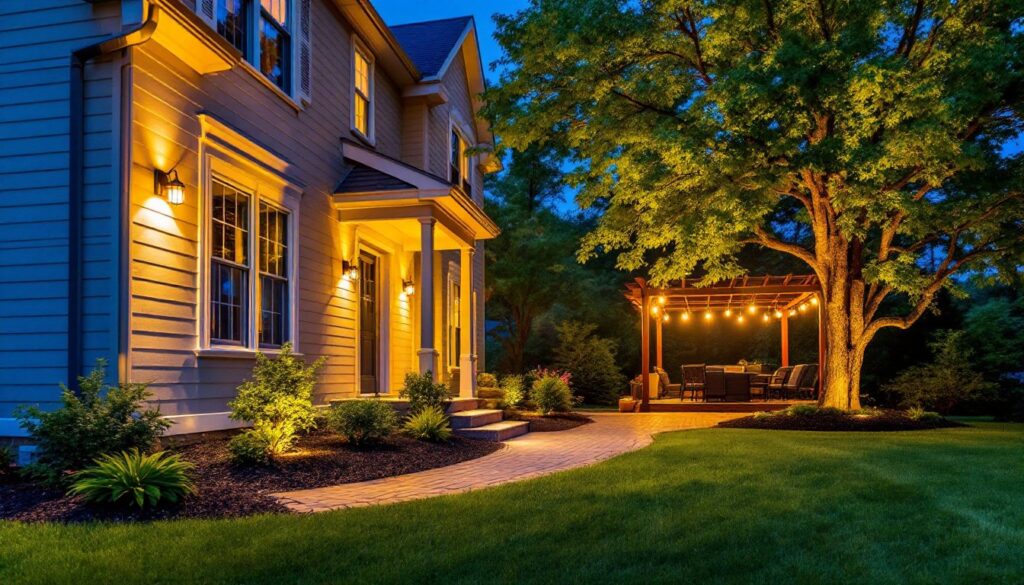
Gaithersburg homes benefit from layered outdoor lighting: ambient, task, and accent. Ambient lighting (like porch fixtures or under-soffit strips) sets overall mood. Task lighting illuminates work areas, entries, and pathways. Accent lighting highlights architectural features or landscaping.
Wall-mounted sconces flanking entry doors are workhorses, they’re attractive, provide security illumination, and handle moisture well. Choose fixtures rated IP65 or higher for wet-location use: this rating indicates sealed construction that resists rain and humidity. A 60-watt equivalent (about 800 lumens) is standard for entry sconces.
Bollard lights (short, pedestal-style fixtures) line pathways and driveways safely without creating tripping hazards. Space them 6 to 8 feet apart on straight runs, closer on curves. Most homeowners pair 3-watt LED bollards for energy efficiency.
String lights and cafe fixtures add charm over patios and decks. Modern weatherproof versions use Edison-style bulbs or shatterproof plastics, resisting Gaithersburg’s occasional ice storms better than older glass designs.
Recessed deck lighting mounts flush into deck fascia or railings, eliminating shadow spots where feet catch edges. These typically use 3-watt or 5-watt LEDs and hide wiring inside the deck structure, cleaner aesthetics, lower snagging risk.
Pathway and Landscape Lighting Options
Landscape spotlights and uplights highlight mature trees, shrubs, or architectural details. Position them low and angle upward to silhouette shapes without glare. For Gaithersburg’s dense foliage, 5-watt to 10-watt LED spotlights usually suffice. In-ground well lights create subtle ground-level glow suitable for accent work near planting beds.
Pathway lights deserve special attention. Solar options (no wiring, simple installation) suit homeowners avoiding electrical work, though brightness dims noticeably on cloudy Maryland days. Hardwired low-voltage (12V or 24V) systems deliver consistent, bright illumination and work reliably through season transitions. A typical low-voltage pathway system uses a transformer plugged into a 120V outlet, stepping voltage down for safety and durability.
Budget-Friendly DIY Outdoor Lighting Installation Tips
Most outdoor lighting projects fit a DIY skill level of “comfortable with basic hand tools and electrical basics.” Here’s how to do it affordably.
Start with low-voltage systems. A hardwired 12V or 24V transformer-based setup (pathway lights, deck lights, landscape spotlights) eliminates 120V installation complexity. These systems cost $150–$400 depending on fixture count, run nearly any outdoor condition, and are safe to install without a licensed electrician in Maryland for most residential setups. Bury cable 12 inches deep if running across lawn areas: use conduit if crossing driveways to protect from future digging.
Plan your layout on paper first. Sketch where fixtures sit, estimate cable runs, and count connections. Undersizing cable or omitting a transformer is a common mistake: undersized wire causes voltage drop and dim lights at circuit ends. A 50-foot run of pathway lights needs thicker gauge wire than a 20-foot run.
Prep the ground properly. Clear weeds and level terrain before laying cable. Gaithersburg’s clay soil can shift seasonally: settled ground prevents cables from rising or pinching. If installing deck lights, drill pilot holes slightly larger than fasteners, forcing screws into dense wood splits trim.
Use weatherproof connectors and conduit. Cheap outdoor connections corrode fast in Maryland humidity. Invest in IP67-rated connectors (fully sealed against moisture). For low-voltage landscape systems, use tinned-copper wire, which resists corrosion better than standard copper.
Test before burying. Plug in the transformer, verify all lights illuminate, and check for dim fixtures (voltage drop). Fix problems before finishing the installation.
If your project includes 120V outlet installation (for a transformer or future hardwired fixture), confirm local Gaithersburg electrical codes and consider consulting a licensed electrician, this work typically requires permits and inspections.
Choosing Energy-Efficient LED Solutions for Year-Round Savings
LED outdoor fixtures have matured significantly. A decade ago, outdoor LEDs were dim and color-shift prone. Today’s options provide warm, consistent light and use 75–85% less energy than incandescent or halogen equivalents.
Color temperature matters for ambiance. Warm white (2700K–3000K) suits patios and entry areas, creating inviting mood. Cool white (4000K–5000K) is better for security and task lighting (parking areas, garage entries) because it’s brighter to human eyes. Many homeowners use warm fixtures for ambiance and cool for security zones.
Look for fixtures with integrated LEDs. Older “LED retrofit” bulbs for standard sockets sometimes fail outdoors due to moisture entering the base. Purpose-built outdoor LED fixtures seal the entire assembly, eliminating this weak point. They cost more upfront ($40–$150 per fixture vs. $15–$30 for a retrofit bulb), but last 25,000+ hours, roughly 5–10 years of nightly use.
Smart home integration adds flexibility. Connected devices for outdoor lighting let you dim, schedule, and control color from a phone. Many Gaithersburg homeowners add smart bulbs to deck and patio fixtures for seasonal entertaining. Confirm compatibility with your home automation platform (Alexa, Google Home, etc.) before buying.
Calculate savings conservatively. A 60-watt incandescent bulb running 6 hours nightly costs roughly $45/year in electricity (at Maryland’s avg. $0.13/kWh). The LED equivalent (9-watt) costs about $7/year. Over 10 years, you save $380 per bulb, often enough to justify a $100 fixture upgrade if it also outlasts three incandescent replacements.
Most Gaithersburg homes can outfit a moderate outdoor lighting plan (10–15 fixtures) with LEDs for $400–$900, depending on fixture type and smart features.
Seasonal Outdoor Lighting Updates for Gaithersburg Weather
Maryland’s seasonal swings affect outdoor lighting planning. Summer humidity and winter cold stress fixtures differently, so adjusting your approach saves headaches.
Spring setup (March–May). Inspect winter-damaged fixtures. Corrosion and water intrusion in poorly sealed connections is common after cold, wet months. Replace corroded fasteners and test all circuits. Spring is ideal for installing new pathway or deck lighting before entertaining season peaks. Gaithersburg’s April-to-May rains mean ensuring drainage holes in fixture housings aren’t clogged: small drainage ports let moisture escape rather than accumulate inside.
Summer maintenance (June–August). High humidity and heat accelerate corrosion and can fade plastic lens covers. Wipe fixtures monthly and check caulking around mounting points. Tree growth also intensifies: prune branches overhead to prevent foliage from blocking uplights or casting unwanted shadows. This is peak entertaining season, so battery backups for pathway lights are worth considering if grid power drops during storms.
Fall adjustment (September–October). Falling leaves clog deck drains and create slip hazards under pathway lights. Clean fixtures and pathways weekly. As days shorten, increase pathway illumination to compensate for earlier darkness. Gaithersburg’s frequent fall rain makes waterproofing seals critical: reapply silicone caulk around exterior-mounted fixtures if gaps appear.
Winter protection (November–February). Ice and freezing rain stress outdoor wiring and connections. Ensure all outdoor outlets have GFCI protection (ground fault circuit interrupter), this safety feature shuts power off if moisture is detected, preventing shock and fire. Snow load on ledge-mounted fixtures can cause sagging: clear snow promptly. Icicle lights require deicing cable run alongside water-collection zones to prevent ice dams that crack housings.
Many Gaithersburg homeowners reduce exterior lighting in winter to save energy, then ramp up for holiday season. Smart scheduling (timers or smartphone apps) automates this transition without manual adjustment.
Conclusion
Thoughtful outdoor lighting transforms your Gaithersburg property into a safe, inviting space across all seasons. Start with a simple plan, pathways and entry security, then expand with ambient and accent fixtures as budget allows. Hardwired low-voltage systems and integrated LED fixtures offer reliability and longevity, while DIY installation keeps costs manageable. Seasonal maintenance ensures fixtures survive Maryland’s humidity and weather swings. With proper planning and realistic effort, homeowners achieve professional results without contractor fees.