Table of Contents
ToggleNautical outdoor lighting brings a breezy, timeless appeal to any porch, patio, or garden, whether you live three blocks from the ocean or a thousand miles inland. The style taps into a universal love of lighthouses, sailboats, and seaside escapes, translating it into fixtures and layouts that feel both sophisticated and welcoming. Adding nautical outdoor lighting doesn’t require a complete outdoor overhaul either: thoughtful fixture choices and placement can shift the entire vibe of your backyard. This guide walks you through the core fixtures, selection criteria, installation basics, and upkeep so you can nail the look without guesswork.
Key Takeaways
- Nautical outdoor lighting delivers timeless appeal across any home style by combining clean lines, weathered materials, and functional design that genuinely withstand salt air, moisture, and UV exposure.
- Lanterns and pendants serve as the anchor of nautical outdoor lighting, with proper selection based on drop length, IP65+ water ratings, and tempered UV-resistant glass to ensure durability.
- Mount wall sconces 60–66 inches from the ground and space them 4–6 feet apart for even light distribution, while hanging fixtures should be positioned 24–30 inches above surfaces with fixture diameter no more than one-third the width of the mounted surface.
- Choose warm-white (2700K) dimmable LED bulbs with a CRI of 90+ for natural color rendering, as they run cool, last 25,000+ hours, and avoid attracting insects while providing flexibility for different lighting moods.
- Always turn off power at the breaker before installation, use UV-rated Romex cable and corrosion-resistant hardware, and confirm GFCI protection requirements with a licensed electrician to meet local electrical codes safely.
- Maintain nautical outdoor lighting every 2–3 months with soft-brush cleaning, inspect seals annually, and plan professional refinishing every 3–5 years to preserve both aesthetic appeal and electrical component protection.
Why Nautical Outdoor Lighting Works for Any Home Style
Nautical design isn’t limited to beachfront properties or cottages with white shutters. The style draws on clean lines, weathered materials, and functional hardware, elements that complement modern farmhouse, coastal, traditional, and even minimalist homes. A brass lantern with rope detailing reads as timeless rather than trendy, which is why nautical fixtures have remained popular for decades.
The color palette lends itself naturally to outdoor spaces: whites, creams, navy, warm brass, and bronze all handle sun exposure and weather without clashing with landscape greenery or exterior siding. Unlike more decorative themes, nautical lighting emphasizes form following function, fixtures are designed to withstand salt air, moisture, and UV exposure, making them genuinely practical investments. Rope wrapping, porthole details, and ship-inspired shapes aren’t just aesthetic choices: they signal durability. When you’re shopping for outdoor fixtures, that connection between style and substance matters. The best nautical pieces perform as hard-working lighting solutions while delivering the look you want.
Essential Nautical Lighting Fixtures for Porches and Patios
Lanterns and Pendants
Lanterns are the anchor of nautical outdoor lighting. Traditional styles feature metal frames (brass, bronze, or stainless steel) with clear or frosted glass panels, sometimes finished with a dark patina or polished bright. Hanging lanterns work well over dining tables or entryways, while post-mounted or wall-hung models suit porch railings and gate posts.
Pendants offer a more contemporary take, think cylindrical or tapered glass with rope-wrapped hardware or a captain’s rope accent. They hang from chain or cable and typically accommodate standard E26 or E27 bulbs (depending on your region). When selecting a pendant, confirm the drop length, the distance from ceiling to fixture bottom, since an 18-inch drop feels intimate over a bistro table but may overwhelm a narrow passage. LED bulbs are ideal here: they run cool, last 25,000+ hours, and avoid attracting insects in the way incandescent bulbs do.
Choose IP65-rated or higher fixtures if they’ll face direct rain or sea spray: that rating ensures the fixture handles water jets without internal damage. Glass panels should be tempered and UV-resistant to prevent clouding and degradation over time.
Wall-Mounted Sconces and Fixtures
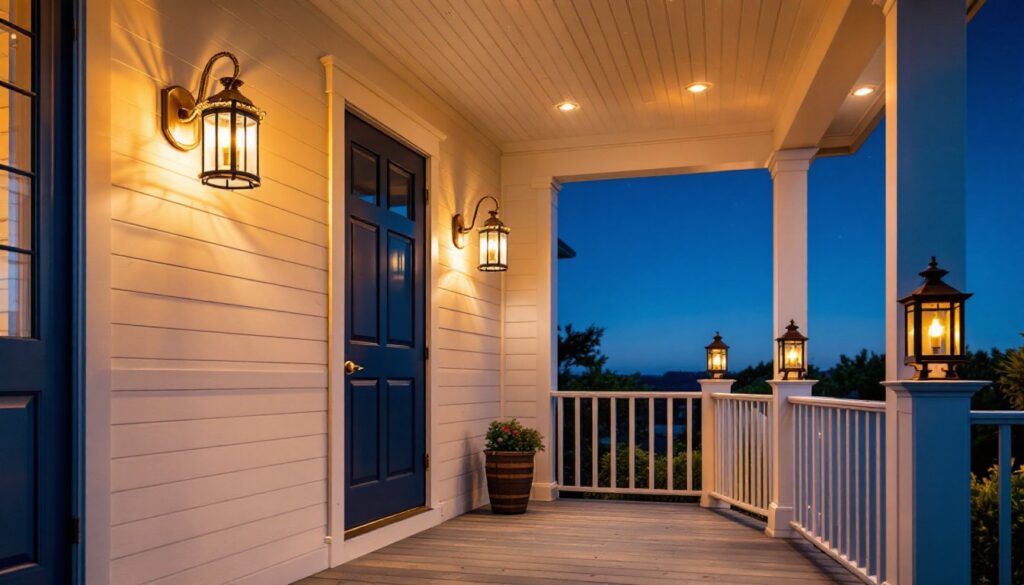
Wall sconces flanking a front door or porch opening provide symmetrical, welcoming light. Nautical sconces typically feature curved arms (reminiscent of ship railings) and cylinder or dome shades. Pair them 4–6 feet apart and mount them at eye level or slightly above, roughly 60–66 inches from the ground, so light distributes evenly without glare.
Ship-style lantern wall fixtures, often square or rectangular with corner trim, suit traditional homes and work particularly well on board-and-batten siding or brick. A brass or bronze finish ages gracefully and pairs well with warm-white LED bulbs (2700K color temperature). These fixtures typically accept bulbs up to 60W equivalent (LED), so always check the label before installing, oversized bulbs can damage sockets or housings.
For patios or garden walls, consider installing 3–5 sconces to create layered ambient light. A single sconce may feel isolated: grouping them creates rhythm and ensures darker patio corners still have adequate visibility for safety and navigation.
How to Choose the Right Nautical Outdoor Lighting for Your Space
Start by assessing your existing outdoor architecture and color scheme. A home with white or cream trim pairs beautifully with brushed brass or polished chrome fixtures: darker exteriors (charcoal, navy, forest green) benefit from oil-rubbed bronze or aged brass finishes. Grab a paint sample of your siding and hold fixture samples up to it, colors shift dramatically in daylight versus artificial light, so don’t rely on online images alone.
Next, think about functionality. Do you need task lighting (over a grill, deck, or dining table) or ambient light to establish mood? Task fixtures require higher wattage and focused beam patterns: ambient lighting can be softer and dimmer. Many nautical pendants and lanterns are sold with dimmer-compatible LED bulbs, which gives you flexibility, you can run them at 100% for evening gatherings and dial them down to 30% for a quiet nighttime porch moment.
Consider the scale and proportion of your space. A large wraparound porch can handle multiple 12–15-inch lanterns: a small apartment balcony drowns under anything larger than 8–10 inches. As a rough rule, fixture diameter should be no more than one-third the width of the surface it’s mounted on. For hanging fixtures, measure the height and width of the area they’ll light, a pendant over a table should be 24–30 inches above the surface and roughly 12 inches narrower than the table width on all sides.
Bulb type matters too. Dimmable A19 or BR30 LED bulbs in warm white (2700K) create a relaxing, familiar light without the heat of incandescent bulbs. Cool-white bulbs (4000K+) feel clinical outdoors unless you’re highlighting architectural details. Color rendering index (CRI) should be 90 or higher so your dining companions and outdoor décor look natural.
Budget considerations: A quality outdoor lantern or sconce from a reputable manufacturer (not a big-box store shelf-filler) runs $60–200 per fixture. Installation costs vary widely depending on whether you’re adding new circuits or tapping into existing electrical boxes. If you’re uncertain about your home’s electrical capacity or need new wiring, a licensed electrician should handle the work, electrical codes exist to prevent fire and shock hazards, and inspectors in most jurisdictions require permits for outdoor circuits.
Installation Tips and Best Practices for Coastal Lighting
Before you drill or cut, plan your layout. Mark fixture locations with painter’s tape or chalk, and stand back at dusk or with your phone’s flashlight to visualize shadows and brightness. Uneven spacing looks amateurish: aim for symmetry on entries and equal distances along railings or pergolas.
Turn off power at the breaker, not just the switch, before working on any electrical connection. If you’re wiring into an existing fixture or junction box, match the wire gauge (typically 12 AWG for standard outdoor circuits) and use waterproof connectors rated for exterior use. UV-rated Romex (Nonmetallic sheathed cable) is code-required for most outdoor runs: don’t substitute indoor cable because UV exposure degrades the insulation within months.
Follow the specific mounting instructions for your fixture. Most lanterns and sconces come with a mounting plate that secures to a wall stud, post, or existing electrical box. Use corrosion-resistant hardware (stainless steel or galvanized fasteners): regular steel bolts and screws will rust and weaken, especially near salt water. Check that your mounting surface is sturdy, drywall anchors alone won’t hold a hanging lantern in a breeze, so locate studs or reinforce with backing boards.
For pendant fixtures, use a swag hook or hardwired ceiling outlet rated for the fixture weight plus a safety margin. A single lantern might weigh 2–5 pounds, but wind load and movement add stress over time. If hanging from a pergola or overhang, consider the material, wood softens and shifts with weather, so recheck fasteners seasonally.
Ground and bond all metal parts according to your local electrical code. Many jurisdictions require GFCI (ground-fault circuit interrupter) protection for outdoor circuits: these devices shut off power if they sense a fault, preventing electrocution. A licensed electrician can confirm what’s required in your area and handle bonding and grounding properly.
Maintenance and Seasonal Updates for Lasting Appeal
Outdoor lighting takes a beating: salt spray, rain, UV light, and temperature swings all contribute to wear. Schedule a cleaning routine every 2–3 months, especially in coastal regions. Use a soft brush or microfiber cloth to remove dust, pollen, and salt buildup from glass and metal. For stubborn oxidation or verdigris (the green patina on brass), a gentle vinegar-and-water spray followed by a dry cloth restores shine without harsh chemicals that can damage finishes.
Inspect seals and gaskets annually. Water infiltration into lanterns and pendants shortens bulb life and can corrode sockets. If seals crack or harden, replacement gasket kits are inexpensive and widely available, order the correct size for your fixture and swap them out (no tools required, usually).
LED bulbs rarely fail, but check connections inside fixtures every year. Loosen the fixture slightly, verify wire connections are tight, and reseat the bulb if it’s gotten loose from vibration. Corrosion on socket contacts can be cleaned with a pencil eraser or fine-grit sandpaper, just disconnect power first.
Seasonal updates don’t mean new fixtures: they mean deliberate lighting adjustments. In winter, shift to dimmer, warmer tones to create coziness as days shorten. Summer entertaining calls for brighter, well-distributed light for safety and visibility. Some outdoor lighting ideas incorporate motion sensors or smart bulbs, which let you adjust color temperature and brightness without climbing a ladder.
For longer-term upkeep, plan to repaint or refinish metal fixtures every 3–5 years depending on your climate. Sealed finishes (clear coat or wax) protect brass and bronze from patina, but they eventually wear. A professional refinish isn’t necessary unless you want: many homeowners embrace the weathered look as part of nautical charm. Just ensure fasteners and electrical components stay protected from corrosion, that’s where rust causes real problems.