Table of Contents
ToggleYour backyard sits dark after sunset, a missed opportunity. Modern outdoor lighting changes that entirely. It’s not just about flipping a switch anymore: today’s outdoor lighting systems blend energy efficiency, smart technology, and thoughtful design to create exterior spaces that are both functional and inviting. Whether you’re looking to boost curb appeal, extend your entertaining season, or improve safety around your home, modern lighting solutions deliver on all fronts. This guide walks you through the essentials of outdoor lighting in 2026, from LED technology to smart controls, so you can make informed choices for your own space.
Key Takeaways
- Modern outdoor lighting combines energy efficiency, smart technology, and design to create functional and inviting exterior spaces that boost safety, curb appeal, and property value.
- LED technology reduces energy consumption by 75% compared to incandescent fixtures and lasts 25,000+ hours, making it the default choice for modern outdoor lighting systems.
- Smart outdoor lighting systems allow remote control via smartphone apps and voice assistants, with the ability to schedule, dim, and adjust color temperature—features that pay for themselves within 2–3 years.
- Layering outdoor lighting with ambient, task, and accent fixtures creates a balanced atmosphere that feels comfortable and sophisticated rather than harsh or sterile.
- Low-voltage systems (12V or 24V) are safe for DIY installation and require minimal permits, while line-voltage (120V) work should be handled by a licensed electrician to ensure safety and compliance.
- Quality outdoor LED fixtures with IP65 or IP67 ratings withstand harsh weather conditions and require little maintenance beyond annual seal checks and twice-yearly lens cleaning.
Why Modern Outdoor Lighting Matters for Your Home
Good outdoor lighting does more than fill darkness, it transforms how you experience your property. Properly lit outdoor spaces feel safer, more welcoming, and larger. You can navigate walkways without stumbling, deter would-be intruders with well-placed accent lights, and create zones for entertaining, grilling, or simply unwinding.
Modern outdoor lighting also adds real value. Potential buyers view homes with thoughtful landscape and architectural lighting as premium properties. Beyond that, today’s LED-based systems cut energy consumption by 75% compared to old incandescent fixtures, dropping your electric bill noticeably. And if you ever tackle a renovation or want to experiment with different layouts, modern fixtures are flexible, you can reposition them, swap bulbs, and adjust brightness without major rewiring.
The shift toward smart outdoor lighting has opened new possibilities, too. You can now schedule lights to turn on at dusk automatically, adjust color temperature to match your mood, or control everything from your phone, even when you’re away. These aren’t luxury features anymore: they’re accessible to any homeowner willing to invest a little time in setup.
Essential Types of Modern Outdoor Lighting
Outdoor lighting falls into a few functional categories, and most projects use a mix. Path and accent lighting guides feet safely along walkways, driveways, and garden beds using low-voltage fixtures (12V or 24V), which require far less wiring headache than line voltage (120V) systems. Flood lights cast broad beams to illuminate large areas like backyards or house fronts: they’re workhorses for security and entertainment spaces. Uplighting aims upward to graze trees, textures, or architectural details, adding dramatic depth to your landscape. Overhead fixtures (pendant lights, chandeliers, or recessed cans) are installed under eaves, on pergolas, or mounted to soffits and provide task lighting for patios and decks.
Wall sconces flank doors and porches, offering both ambient and decorative appeal. Step and rail lights are low-profile fixtures tucked into deck stairs or railings, preventing trips while adding subtle elegance. Start by mapping where you spend time outdoors and what you’re trying to accomplish, security, entertainment, ambiance, or navigation.
LED Technology and Energy-Efficient Solutions
LED technology has matured enough that it’s now the default choice for modern outdoor fixtures. An LED outdoor bulb (typically rated 800–2000 lumens for landscape work) runs cooler than halogen or incandescent equivalents, lasts 25,000+ hours, and uses a fraction of the power. This translates directly to lower electricity bills and far fewer bulb replacements over time.
When selecting LEDs, pay attention to color temperature (measured in Kelvin). Warmer tones (2700K–3000K) feel cozy and intimate: cooler whites (4000K–5000K) mimic daylight and work better for security or task lighting. Many modern LED fixtures offer adjustable color temperature, so you can switch between moods without swapping hardware. Dimming capability is another feature worth seeking: it lets you scale brightness to suit evening entertaining, late-night movement, or full-strength security scanning.
Solid-state outdoor LED fixtures are weatherproof by design, most carry IP65 or IP67 ratings, meaning they resist dust and water immersion. This is critical because outdoor fixtures face rain, humidity, temperature swings, and UV exposure. A quality outdoor LED fixture should last 5–10 years of continuous outdoor use before any noticeable dimming occurs.
Smart and Connected Outdoor Lighting Systems
Smart outdoor lighting adds convenience and flexibility that traditional fixtures can’t touch. Systems like Philips Hue, LIFX, and others let you control brightness, color, and scheduling via a smartphone app or voice assistant (Alexa, Google Home). You can set lights to brighten gradually at dusk, dim during movie time, or flash if motion is detected, all without manual adjustments.
Most smart systems use WiFi or a proprietary mesh network, so range and reliability matter. WiFi-based systems work well if your outdoor fixtures are close to your router or a smart home technology news aggregator extends your signal. Mesh-based systems (like Philips Hue’s bridge) create their own network, often more stable for distributed outdoor fixtures spread across large properties.
Integration is worth considering, too. If you already use a smart home hub, choose outdoor lights compatible with it, mixing ecosystems can create frustration. Security is another angle: make sure any system you adopt uses encrypted connections and receives regular firmware updates to patch vulnerabilities.
One practical note: smart bulbs and fixtures are more expensive upfront than dumb equivalents. Budget an extra 30–50% for smart versions. But, the ability to adjust settings remotely and reduce wasted energy often recovers that cost within 2–3 years.
Design Tips for Creating an Inviting Outdoor Atmosphere
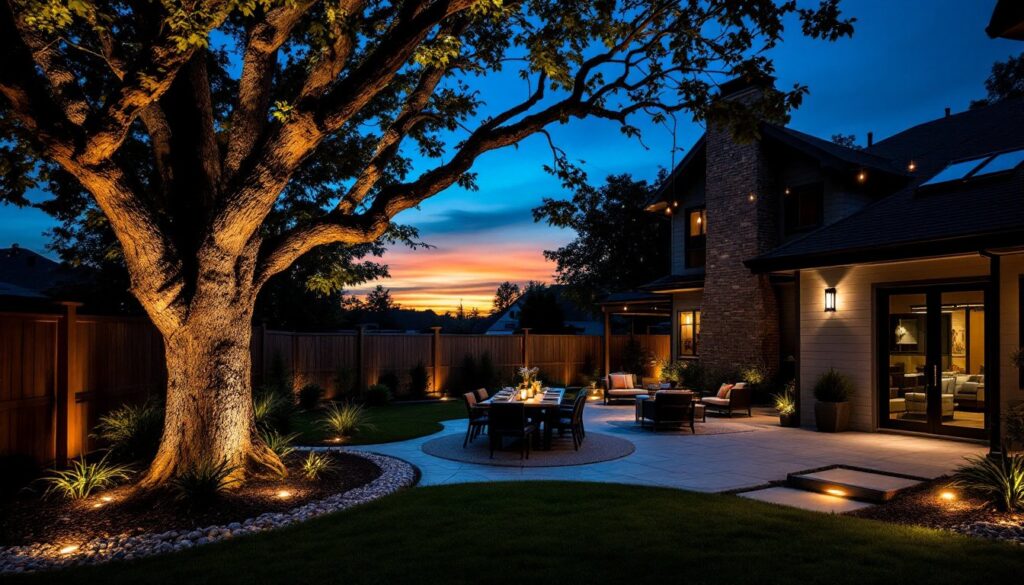
Good outdoor lighting design balances function with aesthetics. Start by identifying focal points, a statement tree, water feature, architectural detail, or seating area. Uplighting or accent fixtures on these elements draw the eye and create visual interest after dark. Avoid over-lighting: overly bright outdoor spaces feel harsh and diminish the sense of escape.
Layering is key. Combine ambient lighting (soft overall glow), task lighting (bright spots for dining or cooking), and accent lighting (drama and depth). When layered correctly, outdoor spaces feel comfortable for lingering rather than sterile or spotlit. For example, a patio might have dimmed overhead string lights or pendant fixtures for ambiance, bright LED downlights focused on the grill or dining table for function, and uplighting on a nearby tree for visual interest.
Cross-reference established design principles with your space: warm colors feel intimate: cooler tones feel modern or energetic. Shadows and texture add sophistication, graze a textured wall or tree bark with light rather than flooding it uniformly. Consider sight lines, too. Fixtures should highlight pathways and entry points without creating glare into windows or neighboring properties.
Transformers that step down 120V to 12V or 24V are standard for low-voltage landscape systems and usually occupy a corner of a garage or shed, hidden from view. A 600W transformer handles roughly 10–12 low-voltage fixtures: scale up as needed. Professional lighting design guides cover fixture spacing, beam angles, and placement in depth if you want to dive deeper.
Installation and Maintenance Best Practices
Before you install anything, check local codes and permits. Some jurisdictions require licensed electricians for any 120V work: others allow homeowners to wire low-voltage systems without a permit. Call your local building department or ask an electrician, skipping this step can bite you during a home sale or insurance claim.
Low-voltage systems (12V or 24V) are usually safe for DIY installation. Bury landscape cable 4–6 inches deep, use waterproof connectors rated for outdoor burial, and keep the transformer in a weatherproof enclosure. Label every fixture and wire so you (or the next owner) can troubleshoot easily. Run cable along fence lines or under mulch to keep it tidy and protected from lawn equipment.
Line-voltage (120V) outdoor circuits typically need a dedicated breaker and GFCI (ground-fault circuit interrupter) protection. If you’re not comfortable trenching, conduit installation, or working inside your electrical panel, hire a licensed electrician. This is one place where a professional’s expertise prevents shock hazards or fires.
Maintenance is minimal if you’ve chosen quality fixtures. Clean light covers and lenses twice yearly to remove dust and debris, which dims output. Check weatherproof seals around sconces and underwater lights annually. Most outdoor LEDs require little else, they’ll hum along for years. If you live in a harsh climate (salt spray, extreme temperature swings), consider protective coatings or stainless-steel hardware to resist corrosion.
For smart systems, update firmware regularly and use strong, unique passwords. Inspect wire connections in spring to catch damage from freeze-thaw cycles. If a fixture fails, most modern systems are modular, you can swap in a replacement without overhauling the whole network. Articles on landscape lighting design offer deeper installation walkthroughs specific to different fixture types.
Conclusion
Modern outdoor lighting bridges aesthetics and practicality in ways that older systems simply couldn’t. By choosing LED technology, layering fixtures thoughtfully, and embracing smart controls where they make sense, you create outdoor spaces that feel purposeful and inviting long after sunset. Start small with a few key fixtures, observe how light moves across your yard, and expand from there. The best outdoor lighting feels invisible until it’s gone, it simply makes your space better to use, safer to move through, and more appealing to look at. Your backyard is waiting.