Table of Contents
ToggleGlass pendant lights have become a go-to solution for homeowners wanting to blend form and function. Unlike bulky overhead fixtures or harsh recessed lighting, glass pendants offer focused illumination with visual warmth and personality. Whether you’re updating a kitchen island, brightening a bathroom, or adding character to an entryway, glass pendant lighting delivers both practical light and decorative appeal. The variety of styles, from clear geometric shapes to frosted finishes and colored glass, means there’s a pendant to match nearly any design direction. This guide walks you through selecting, installing, and styling glass pendants so you can nail the look without hiring an electrician (though some installations do require one).
Key Takeaways
- Glass pendant lighting combines practical task lighting with decorative design, offering focused illumination and visual warmth that transforms any room’s aesthetic.
- Proper installation height matters: hang kitchen island pendants 12-18 inches below cabinets, dining pendants 30-36 inches above tables, and ensure your fixture is level before securing.
- Choose between clear glass for modern/industrial spaces and frosted glass for traditional/farmhouse styles, with colored and textured options available for bolder design statements.
- Layer glass pendant lights with ambient and accent lighting to create balanced, functional illumination and avoid dark corners throughout your home.
- Match pendant spacing evenly (18-24 inches between centers for multiple fixtures) and coordinate color temperature across bulbs to maintain a cohesive, intentional look.
Why Glass Pendant Lights Transform Your Home Design
Glass pendants work because they do two jobs at once. First, they deliver focused, directional light where you need it, over a desk, sink, or dining table. Second, they become a design statement the moment you flip the switch. Unlike a bland flush-mount, a pendant draws the eye and sets the tone for the whole room.
The material itself is key. Glass diffuses and softens light better than plastic or metal alone, creating a more inviting atmosphere. When light passes through clear glass, you see the bulb’s warm glow: through frosted glass, the light spreads evenly without glare. That’s not just aesthetics, it’s practical lighting science.
Glass also plays well with other finishes. Pair a modern clear glass pendant with brushed nickel hardware in a minimalist kitchen, or match a colored glass bowl with warm brass in a bohemian living room. Pendant lighting isn’t just. The fixture becomes part of your décor from day one.
Types of Glass Pendant Fixtures for Every Room
Clear and Frosted Glass Options
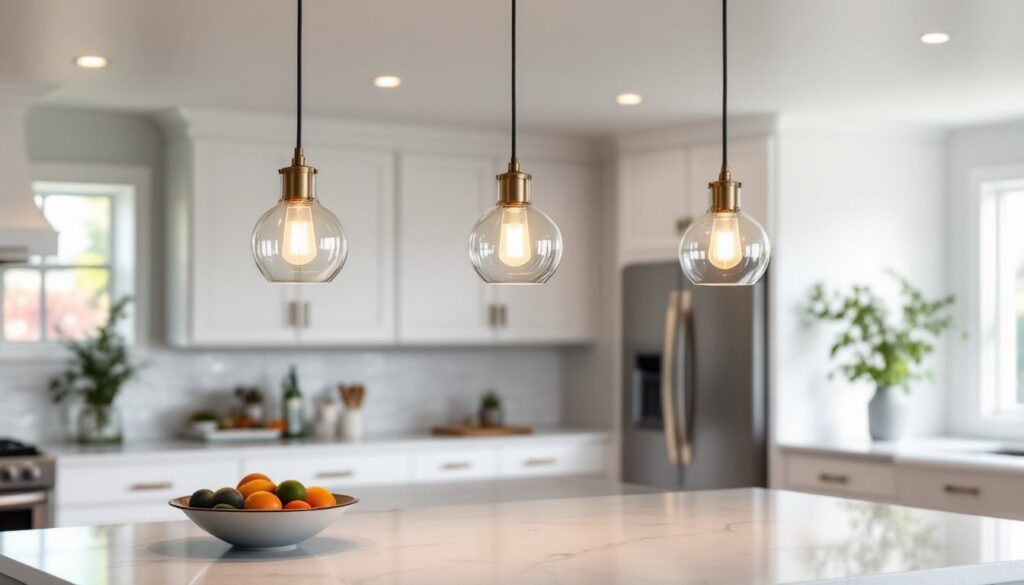
Clear glass pendants are the workhorse of pendant lighting. You see the bulb and its filament, which means you need a quality LED or Edison-style bulb, it’s part of the design. Clear glass works especially well in industrial, mid-century modern, and contemporary spaces. A clear dome or cylinder pendant above a kitchen counter reflects light efficiently and won’t hide dust or bugs inside the shade.
Frosted glass softens that look. The opaque finish diffuses light evenly, reducing glare and creating a softer ambiance. Frosted pendants suit traditional, farmhouse, and transitional styles. They hide the bulb, so you have more flexibility with standard bulbs. A frosted glass shade also works well in bedrooms or dining areas where you want warm light without harsh shadows.
Colored and Specialty Glass Designs
Colored glass adds personality and can anchor a color scheme. Amber and smoky gray glass are popular choices, they’re warm but not trendy enough to feel dated in a few years. Blue, green, and rose-tinted glass appeal to bolder designers who want their pendants to make a statement. Keep in mind that darker glass reduces light output, so pair it with adequate ambient lighting in task areas like kitchens.
Specialty glass includes hand-formed or textured finishes, think ribbed, hammered, or seeded glass. These catch light in interesting ways and add visual depth. Hand-formed glass petal pendants, combining functional design with gallery-quality detail. Textured glass also masks fingerprints and water spots better than smooth surfaces, a practical bonus for kitchens and bathrooms.
Choosing the Right Glass Pendant for Your Space
Start by measuring your space and considering the pendant’s job. Over a kitchen island, a pendant should hang 12 to 18 inches below the bottom of your cabinets (or about 30 inches above the countertop). This height keeps light focused on the work surface without blocking sightlines. For a dining table, aim for 30 to 36 inches above the table.
Consider the diameter too. A single pendant works for a small sink or desk: a linear arrangement of two to four pendants suits a longer counter or island. As a rough rule, the pendant’s width should be about one-third the width of the surface below it. If your island is 36 inches wide, a 12-inch pendant or a cluster of smaller ones will feel proportional.
Light output matters in task areas. Check the bulb wattage the fixture accepts and confirm it matches your needs. A kitchen island needs at least 800 to 1000 lumens (roughly equivalent to two 60-watt incandescent bulbs). Dining areas and entryways can get by with less. LED bulbs are efficient and run cool, so you can use frosted or colored glass without overheating the shade.
Think about the overall style. Modern interior design trends emphasize mixing metals and glass finishes to create visual interest. A clear glass pendant with matte black hardware fits contemporary kitchens, while a frosted shade with warm brass suits transitional or farmhouse aesthetics. Don’t feel locked into one style, small pendants are affordable enough to replace if your taste shifts.
Installation and Placement Tips for Maximum Impact
Installation difficulty depends on whether you’re replacing an existing fixture or running new wiring. If you’re swapping out an old pendant, turn off power at the breaker, disconnect the old fixture, and follow the new pendant’s wiring diagram. Most modern pendants use a standard mounting bracket and come with clear instructions.
If you’re running new circuits or moving a fixture, you’re dealing with electrical work that typically requires a licensed electrician in most jurisdictions (check your local code). Don’t skip this, it’s a safety issue, not a shortcut opportunity.
For placement, think about symmetry and balance. Over a kitchen island, space pendants evenly. If hanging three pendants over a 48-inch island, place them at 12, 24, and 36 inches from one end. Uneven spacing looks accidental, not intentional.
Use a rod or chain of the right length. Most pendants come with 12 to 18 inches of chain: you can extend this with a coupling. Shorter rods (4 to 6 inches) give a modern, tucked-in look: longer chains create drama and work in high-ceiling rooms. Measure twice and mark your ceiling with a pencil or tape before drilling.
When installing, ensure the mounting bracket is level using a spirit level. Crooked pendants broadcast “DIY mistake” louder than anything else. Use the right anchors for your ceiling type, drywall anchors for standard drywall, toggle bolts for hollow walls, or direct studs for maximum security. If you hit a joist by luck, use a lag bolt or wood screw instead.
Styling Ideas: Creating Cohesive Lighting Arrangements
Mixing glass pendants with other light sources creates balanced, functional lighting. Layer task lighting (pendants), ambient lighting (ceiling fixtures, wall sconces), and accent lighting (under-cabinet strips, table lamps) to control mood and functionality. A kitchen with only pendants over the island will feel dark in corners: add recessed lights or a flush-mount to fill gaps.
Consider color temperature too. Most modern LED bulbs come in warm white (2700K) or cool white (4000K). For living areas, dining rooms, and bedrooms, stick with warm white, it’s inviting and feels like home. Kitchens and bathrooms can handle cool white for better task visibility, though warm white is more forgiving. Keep the temperature consistent throughout your fixture lineup to avoid a patchwork look.
Spacing pendants matters. Hang them at the same height unless you’re deliberately creating variation (which works in high-design interiors but can feel sloppy elsewhere). In a hallway or entry, a single centered pendant is classic. Above a long counter or island, space them evenly with roughly 18 to 24 inches between centers. Discover how thoughtful lighting through careful fixture selection and placement.
Don’t overlook the ceiling. A white or light-colored ceiling reflects pendants’ light and opens up the space. A dark or painted ceiling can make pendants feel like floating islands of light, which works in dramatic dining rooms but might feel isolated in kitchens. Test the look by hanging a temporary fixture (with proper support) before committing to permanent installation.
Final Thoughts: Make It Work for Your Home
Glass pendant lighting isn’t complicated, but it rewards planning. Take time to measure, choose fixtures that match your style and light needs, and install them properly, level and at the right height. If electrical work is involved, call a licensed electrician: the cost is small compared to a failed DIY attempt.
Start with one or two pendants in a secondary space (hallway, bathroom, entry) if you’re new to the style. Once you see how they transform light and space, you’ll understand why they’re a staple in modern homes. Your future self, and your guests, will notice the difference.