Table of Contents
ToggleCopper pendant lighting has become a go-to choice for homeowners and designers tackling kitchen island renovations. This warmth and versatility make copper fixtures work in nearly any kitchen aesthetic, whether you’re going industrial, farmhouse, or contemporary. Beyond looks, copper pendants offer practical benefits: they diffuse light evenly, hang at adjustable heights, and age beautifully over time. If you’re planning a kitchen island lighting upgrade, understanding copper’s properties, design options, and installation requirements will help you make the right choice for your space.
Key Takeaways
- Copper pendant lighting for kitchen islands provides warmth, durability, and even light distribution while developing an attractive natural patina that hides dust and fingerprints over time.
- Proper hanging height (12–20 inches above the counter) and spacing (24–36 inches apart) ensure optimal task lighting and visual balance without creating shadows or clutter.
- Modern designs work best with pendant shades 8–12 inches in diameter; pair or trio configurations suit most islands, with sizing based on island length (two to three for 4-foot islands, three to four for 6-foot islands).
- Kitchen electrical code requires a dedicated, switch-controlled circuit for pendant fixtures, making professional installation essential when new wiring is needed.
- Copper pendants require minimal maintenance—monthly dusting for polished finishes or seasonal inspection for patina styles—and should use LED or appropriate-wattage bulbs to prevent overheating and warping.
Why Copper Pendant Lights Are Perfect for Kitchen Islands
Copper strikes a rare balance between function and aesthetics. Unlike sleek chrome or cold steel, copper has warmth, it glows under task lighting and complements wood, stone, and tile without feeling trendy or temporary. More importantly, it’s durable. Copper develops a natural patina over time, a darkening that many homeowners find attractive because it hides minor fingerprints and dust better than polished finishes.
For kitchen islands specifically, pendant lights solve a real problem: overhead ceiling fixtures often leave the island surface in shadow or create glare if you’re working directly underneath. Pendants hang lower (typically 12 to 20 inches above the counter), targeting light exactly where you chop, prep, and work. Copper’s light-reflective properties bounce illumination around the space, reducing harsh shadows compared to darker finishes.
Copper also pairs naturally with existing kitchen materials. If your island has wood cabinetry, a stainless steel appliance, or granite countertop, copper accents tie elements together without matching perfectly, which actually looks more intentional than cookie-cutter matching.
Choosing the Right Copper Pendant Style for Your Space
Modern and Minimalist Designs
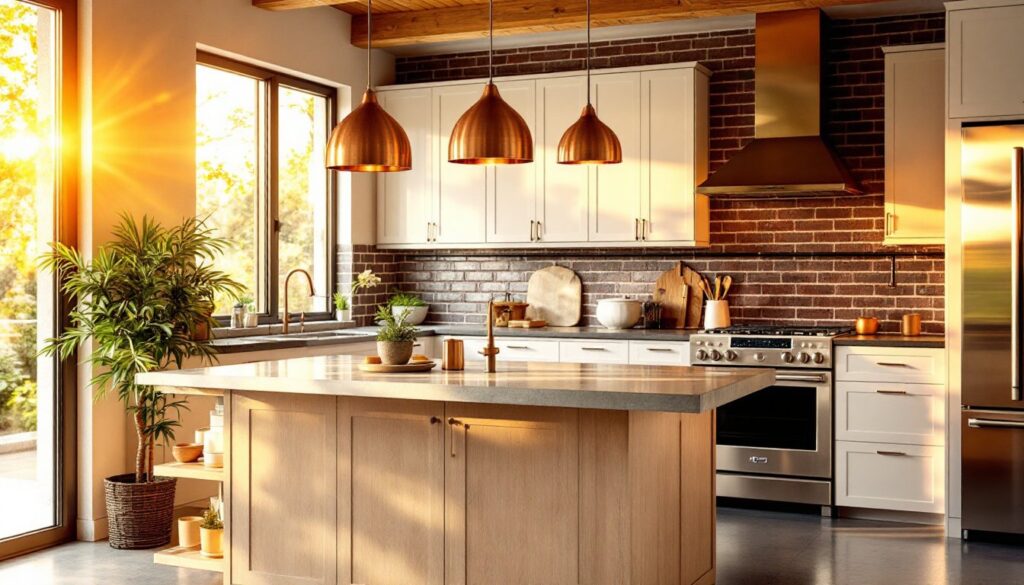
Modern copper pendants prioritize clean lines and geometric shapes, expect thin-walled drum shades, cone pendants, or sphere designs in burnished or brushed copper finishes. These styles work well in contemporary kitchens with white cabinetry, quartz countertops, and integrated appliances. A pair or trio of identical pendants spaced evenly over your island creates symmetry and balance.
For sizing, a pendant shade between 8 and 12 inches in diameter works for most kitchen islands. Measure your island length: if it’s 4 feet, plan for two or three pendants: if it’s 6 feet, three or four pendants work better. The goal is even light coverage and visual proportion, too few pendants leave dark spots, too many clutter the space. According to pendant lighting design guides, spacing pendants 24 to 36 inches apart prevents overlap and maintains clean sightlines.
Vintage and Industrial Options
Vintage and industrial copper pendants embrace texture, patina, and visible hardware. Look for Edison-style bulbs housed in perforated or cage-like shades, or schoolhouse designs with deeper copper domes and exposed mounting brackets. These styles lean into copper’s aging properties, many come pre-patinized or develop rich brown-green tones naturally.
Industrial copper pendants often feature heavier gauge copper (thicker, more durable material) and detailed craftsmanship. They pair beautifully with exposed brick, concrete, stainless countertops, and wood beams. If your kitchen includes any salvaged materials or vintage appliances, industrial copper bridges old and new seamlessly. Research from design resources like curated pendant selections for kitchen islands shows that mixing finishes, matte copper with polished stainless, for instance, creates visual interest without chaos.
Installation Tips and Best Practices
Before hanging a single pendant, turn off power at the breaker and confirm the electricity is off with a voltage tester. Copper pendant installation follows standard hanging-light procedures, but kitchen-specific considerations matter.
First, determine your hanging height. Pendants should hang 12 to 20 inches above the counter surface, low enough to focus light on work areas but high enough to avoid blocking sightlines across the island. If your island has bar seating, 15 to 18 inches clears heads comfortably. Mark this height on the ceiling with a pencil, then use a stud finder to locate joists. Ceiling joists support heavier fixtures: if you’re hanging three pendants, you may need to install a mounting bar or spreader plate to distribute weight across multiple joists.
Most copper pendants ship with a junction box (the outlet box that attaches to the ceiling) and hardware. Follow the manufacturer’s instructions exactly, the fixture’s weight rating and the junction box’s load capacity must match your chosen pendants. For a trio of 2- to 3-pound copper pendants, a standard 1⁄2-inch junction box rated for 50 pounds handles the load fine.
Electrical code (NEC) requires that pendant fixtures in kitchens connect through a switch-controlled circuit. Your island lights should operate independently, not tied to under-cabinet or other countertop outlets. If your island lacks a dedicated line, this becomes a permit job, hire a licensed electrician. Running new wire through walls or ceilings requires inspection in most jurisdictions.
After mounting the junction box and running wire, connect the pendants’ leads (usually a black/hot and white/neutral pair) to the appropriate house wires inside the junction box using wire nuts, then secure the canopy (the decorative trim plate that hides the junction box). Let everything cool before adjusting pendant heights if they’re suspended on adjustable cords or chains. Copper warms slightly under incandescent or halogen bulbs, so give it 30 minutes to settle.
Maintenance and Care for Long-Lasting Copper Fixtures
Copper’s main appeal is also its care requirement. The metal naturally oxidizes (tarnishes), developing a dark patina that protects the underlying copper but needs periodic cleaning to maintain shine, or you can embrace the patina for an aged look.
For a polished finish, dust pendants monthly with a soft, dry cloth. If you want to restore shine, use a specialized copper cleaner (like Brasso or Bar Keeper’s Friend mixed with water) and a non-abrasive pad. Never use steel wool or harsh scrubbers: these scratch the surface and accelerate patina buildup in unwanted patterns. Wipe down with a damp cloth, then dry immediately to prevent water spots.
If you prefer the weathered patina look, and many DIYers do, light dusting is all you need. The patina doesn’t harm the fixture: it’s a protective layer. Just brush away cobwebs and dust buildup quarterly. Kitchen environments (humidity, cooking steam) may accelerate patina in unpredictable ways, so inspect your pendants twice yearly for any loose connections or corrosion around the mounting hardware.
For longevity, ensure pendant bulbs use LED or modern incandescent wattage appropriate for the fixture (check the label inside the shade). Overheating shortens the copper’s life and can warp thinner-walled shades. Kitchen lighting design includes pendant fixtures as key elements, so keeping them clean and functional preserves both safety and appearance. If patina becomes too heavy or uneven, you can hire a professional restoration service, but this is unnecessary for most homeowners, natural aging is part of copper’s charm.
Conclusion
Copper pendant lighting transforms kitchen islands from purely functional zones into design focal points. Whether you choose sleek modern designs or richly textured industrial styles, copper delivers warmth, durability, and timeless appeal. Plan your height and spacing carefully, handle electrical work safely (or call a pro), and embrace copper’s natural patina as it ages. Your island lights will anchor the kitchen for years to come.