Table of Contents
ToggleCoastal homes face unique challenges when it comes to outdoor lighting. Salt spray, humidity, and intense UV exposure corrode standard fixtures faster than you’d expect, turning a nice setup into rust-spotted eyesores within a season or two. Whether you’re perched on a cliff in Maine, running a beach cottage in Florida, or maintaining a seaside retreat in California, choosing the right coastal outdoor lighting isn’t just about aesthetics, it’s about durability and long-term value. This guide walks you through the materials, styles, placement strategies, and energy-efficient options that actually hold up in harsh coastal climates, so your investment stays beautiful and functional year-round.
Key Takeaways
- Coastal outdoor lighting must use 316 stainless steel or marine-grade coated metals to resist salt spray corrosion and UV damage that corrodes standard fixtures within 1–2 seasons.
- Position fixtures under covered porches, soffits, or sheltered areas to minimize direct salt spray exposure and significantly extend the lifespan of your investment.
- LED bulbs rated for outdoor use (2700K–3000K color temperature) run cooler and consume 75–85% less energy than incandescent options while reducing thermal stress on fixture seals in humid, salty environments.
- Lantern-style and flush-mount fixtures with sealed gaskets provide both coastal aesthetic appeal and superior protection for bulbs and wiring against moisture infiltration.
- Layer your coastal outdoor lighting design with ambient, task, and accent lighting to improve usability and mood while reducing unnecessary fixtures and energy waste.
- Verify that your coastal outdoor lighting fixtures meet local IRC and NEC codes, especially GFCI protection and wet-location ratings required in most coastal jurisdictions.
Why Coastal Outdoor Lighting Requires Special Considerations
Standard outdoor lighting fixtures aren’t designed to withstand the marine environment. Salt-laden air is incredibly aggressive, it speeds up oxidation and corrosion far beyond what you’d experience inland. UV radiation from sun reflection off sand and water degrades plastic components, wiring insulation, and paint finishes faster than normal weathering. Moisture and salt combine to create an electrolyte that attacks bare metals, particularly steel and aluminum that haven’t been properly coated.
Building codes also come into play. Coastal zones often have stricter electrical requirements due to the corrosive environment: check your local IRC (International Residential Code) and NEC (National Electrical Code) for salt-spray-rated equipment specifications. Many jurisdictions require GFCI (ground-fault circuit interrupter) protection on all outdoor circuits in coastal areas, and some mandate that fixtures be rated for “wet locations” rather than just damp ones.
Taking these factors seriously upfront saves money and headaches. A fixture that costs 30% more but lasts 10 years is far cheaper than replacing a corroded standard fixture every 2 to 3 years.
Choosing Weather-Resistant Materials For Coastal Environments
Material selection is the foundation of coastal lighting durability. You want components that resist salt corrosion, UV breakdown, and moisture infiltration without requiring constant maintenance.
Stainless Steel And Marine-Grade Options
316 stainless steel is your gold standard for coastal fixtures. Unlike 304 stainless steel (common inland), 316 contains added molybdenum, which significantly improves corrosion resistance in salty environments. Look for fixtures explicitly labeled “316 marine-grade” or “316L stainless steel.” They cost more upfront, typically 40–60% above standard stainless, but the investment is worthwhile if you’re within a mile or two of the ocean.
For pole-mounted fixtures and large structure elements, consider hot-dip galvanized steel. This coating process submerges steel in molten zinc, creating a thick, durable barrier. It’s less expensive than stainless and performs well in moderate coastal climates, though it may need occasional touch-ups in extreme spray zones.
Aluminum can work if it’s powder-coated or anodized. Bare aluminum oxidizes (though the oxide is protective), so ensure any aluminum fixtures have a factory finish rated for salt spray. Ask suppliers for ASTM B117 salt-spray test results, a standard that simulates 1,000+ hours of corrosive exposure.
Avoid cast iron, mild steel, and bare brass in coastal settings. They corrode rapidly and are difficult to restore once pitting starts. Plastic fixtures degrade under UV: if you choose resin or polycarbonate, verify they’re UV-stabilized and rated for coastal environments. Copper and bronze develop patina (often attractive), but they’re not the best choice for maximum durability if aesthetics are your priority.
Best Lighting Styles For Coastal Homes
Coastal aesthetics lean toward clean lines, nautical references, and fixtures that complement natural surroundings rather than compete with them. The good news: durability and style aren’t mutually exclusive.
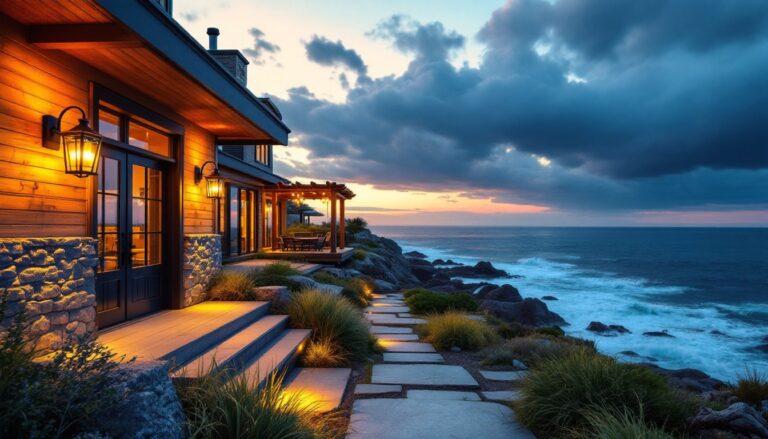
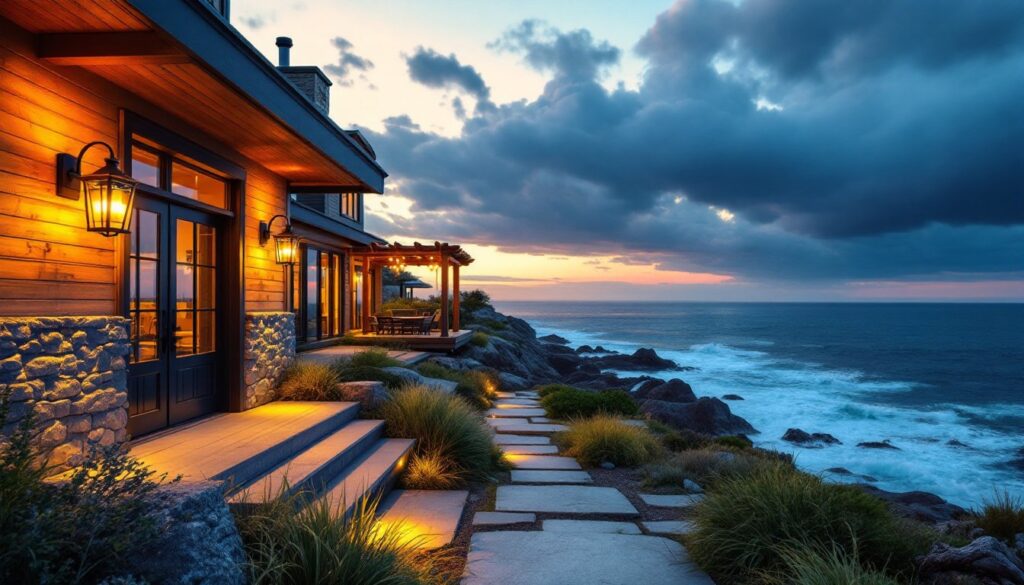
Lantern-style fixtures are classics for a reason. Stainless steel ship lanterns or powder-coated aluminum versions evoke maritime tradition while offering excellent protection for the bulb and wiring. Pair them with warm LED bulbs (2700K color temperature) flanking an entryway or deck.
Flush-mount and semi-flush fixtures work well on soffits or covered porches. These limit salt spray exposure and direct rain away from the fixture base. Look for sealed designs with gaskets that prevent moisture creep.
String lights and rope lights add charm to patios and pergolas. Modern weatherproof options use UV-resistant PVC jackets and marine-grade connectors. External guides suggest weatherproof string lights suitable for coastal outdoor settings with tested durability. Avoid vintage-style Edison bulbs (beautiful but fragile): instead, go with modern vintage-look LEDs designed for outdoor use.
Wall-mounted sconces provide accent lighting with minimal hardware exposure. Stainless steel backs with solid mounting plates resist vibration and moisture better than wispy designs.
With outdoor lighting ideas ranging from nautical lanterns to modern minimalist, you’ll find options that match your home’s character while standing up to salt and spray.
Practical Placement Tips For Maximum Impact
Where you install fixtures matters as much as what you install. Salt spray travels furthest in prevailing wind patterns, so fixtures in the direct line of wind-driven spray need the highest corrosion ratings. East- or northeast-facing exposures in Atlantic coastal homes take the brunt: west-facing ones in Pacific settings do the same.
Mounting heights and positions also affect longevity. Fixtures under covered porches, soffits, or behind structural elements last longer than fully exposed installations. If you’re mounting pole lights in open yards, use stainless steel poles and check that the base is properly sealed and elevated above grade to prevent water pooling.
For deck and patio lighting, recessed or low-profile fixtures tend to perform better than tall, ornate designs that catch wind and accumulate salt deposits on multiple surfaces. Downlighting from eaves or pergola beams creates ambiance while sheltering the fixture itself.
Path lighting along dune edges or beach access ways should use corrosion-resistant stakes and sealed junction boxes. LED solar path lights are tempting cost-savers, but verify that batteries and circuit boards are rated for humidity and salt spray, many budget options aren’t.
Consider spacing, too. Fixtures 8–12 feet apart along pathways provide safe, navigable light without creating harsh shadows or over-illuminating the landscape. For upighting trees or accent features, position fixtures slightly forward of the subject rather than directly behind it to reduce glare and salt accumulation on the fixture lens.
Energy-Efficient Solutions For Outdoor Coastal Lighting
LED technology is a game-changer for coastal outdoor lighting. LEDs run cooler than incandescent or halogen bulbs, reducing thermal stress on fixture seals and gaskets, a real benefit in humid, salty environments. They also consume 75–85% less energy, cutting your operating costs significantly over a season.
Choose LED bulbs rated for outdoor use with a color temperature between 2700K (warm, amber-toned) and 3000K (neutral white). Avoid blue-tinted 5000K+ options outdoors: they attract insects and feel harsh near water.
Smart outdoor lighting systems let you control brightness and schedules remotely, reducing wasted energy. Many are now rated for coastal use with sealed wireless components. If you’re adding new circuits, consider installing a dedicated outdoor panel with a main breaker and surge protection. This protects against salt-air-induced voltage spikes and makes maintenance simpler.
Solar-powered fixtures appeal to eco-conscious homeowners, but in coastal settings, salt deposits accumulate on solar panels and reduce efficiency 20–40% compared to clean inland installations. If you choose solar, mount panels where they’re easy to rinse monthly with fresh water, and verify the manufacturer’s coastal durability ratings.
When upgrading, many homeowners discover that proper outdoor lighting design balances aesthetics with efficiency, reducing unnecessary fixtures and consolidating lighting zones. A well-lit coastal home doesn’t need more fixtures, it needs the right ones in the right places. Layer your approach: ambient lighting for general navigation, task lighting for functional areas (decks, stairs), and accent lighting for visual interest. This strategy cuts energy waste while improving usability and mood.
Conclusion
Coastal outdoor lighting doesn’t have to be complicated, but it does demand intentional material choices and thoughtful placement. Prioritize 316 stainless steel or marine-grade coated metals, seal fixtures properly, and position them to minimize direct salt spray exposure. Pair durable hardware with efficient LEDs, layer your lighting design, and you’ll create an outdoor environment that looks great and holds up through years of salt, sun, and spray. Start with one or two key fixtures, an entry lantern or patio accent light, and expand from there. Your beachside home deserves lighting that’s as tough as the climate it faces.