Table of Contents
ToggleNaples homeowners know that when the sun sets, most outdoor spaces fade into darkness, unless you’ve got a solid lighting plan. Landscape lighting isn’t just about visibility: it’s about extending your home’s living space, boosting curb appeal, and enhancing security all year round. In Florida’s unique climate, where humidity and salt air can beat up outdoor materials, choosing the right fixtures and installation method matters more than you’d think. Whether you’re planning a full backyard redesign or adding accent lights to your front entry, this guide walks you through Naples landscape lighting strategies that work in the real world, not just in design magazines.
Key Takeaways
- Naples landscape lighting extends your outdoor living space, boosts curb appeal, and enhances home security while creating functional nighttime environments for entertaining and relaxation.
- Choose aluminum or stainless steel fixtures with powder-coated finishes and LED technology to resist Florida’s humid, salty coastal climate and avoid corrosion issues within years.
- Uplighting and accent lighting techniques—positioning fixtures at ground level or offset angles—create dramatic depth and dimension that highlight architectural details and mature landscaping without excessive glare.
- Path lighting spaced 4 to 6 feet apart with warm color temperatures (2700K–3000K) provides safe navigation while maintaining a natural, inviting ambiance across your property.
- Low-voltage (12V) systems work well for DIY installation of path and accent lights, while line-voltage (120V) circuits for pool or flood lighting require licensed electricians and local permits to meet NEC codes and ensure safety.
- Professional landscape lighting design typically costs $2,000–$8,000+ but delivers superior results, proper fixture positioning, code compliance, and warranty protection that maximize long-term value and function.
Why Landscape Lighting Matters for Your Home
Good outdoor lighting serves multiple purposes beyond aesthetics. It creates usable outdoor space after dark, allows you to enjoy your patio or pool long into the evening, and makes it harder for intruders to approach your home unnoticed. A well-lit front yard also increases perceived home value and safety, poorly lit walkways and steps are liability issues if a guest trips.
In Naples, where many homes sit on larger lots with mature landscaping, strategic lighting transforms your property’s nighttime presence. It highlights architectural details, draws attention to mature trees and plantings, and creates focal points that simply aren’t visible once the sun drops. Proper illumination also reduces energy waste compared to floodlighting your entire yard with one bright fixture.
From a practical standpoint, landscape lighting adds functionality. Pathway lights guide visitors safely to your door, pool lights extend swim season usability, and deck lighting makes outdoor dining and entertaining possible. Unlike interior lighting that you can easily retrofit, outdoor systems benefit from planning upfront, running wiring underground or along structures works best during initial design, not as an afterthought.
Essential Landscape Lighting Techniques for Naples Properties
Uplighting and Accent Lighting Strategies
Uplighting places a fixture at ground level pointing upward to silhouette trees, architectural elements, or focal points. This technique creates drama and depth in your landscape, especially effective on mature oaks or palms common in Naples yards. Aim the light source so it grazes the surface rather than pointing straight up, this minimizes glare and makes the effect look intentional rather than accidental.
Accent lighting highlights specific features: specimen trees, water features, stonework, or textured walls. A single 12-watt LED spotlight can define a planting bed or emphasize a decorative element without consuming much power. Position these lights offset from the feature, not directly in front, indirect angles create shadow and dimension that flat, frontal lighting can’t match.
When uplighting in Naples’ humid environment, choose fixtures with solid aluminum or stainless steel construction to resist corrosion. Avoid bare brass or untreated metals: salt air will oxidize them within months. LED sources are ideal here because they run cooler, last 25,000+ hours, and consume roughly 75% less energy than halogen alternatives, a real win in Florida’s summer months when AC already works overtime.
Path and Ambient Lighting Solutions
Path lighting serves a practical function: it guides guests safely along walkways, driveways, and steps. These fixtures sit low to the ground, typically 6 to 12 inches tall, and cast light downward onto the walking surface. Space them roughly 4 to 6 feet apart along your pathway: closer spacing creates continuity, while wider gaps still provide safe passage without looking like an airport runway.
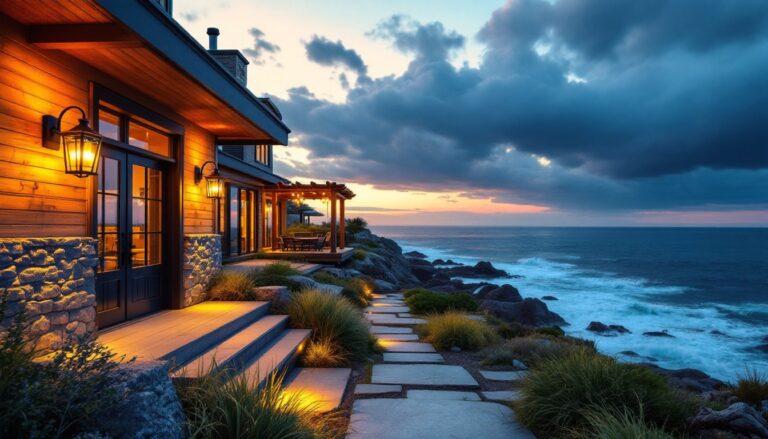
Ambient lighting fills in the broader landscape, creating a soft glow that makes the yard feel inviting. This often comes from fixtures mounted on the house, deck railings, or pergolas at 6 to 8 feet high, washing light across planting areas and lawn. Unlike accent lighting, which draws attention to specific features, ambient lighting establishes overall visibility and mood.
In Naples, outdoor lighting ideas transform a dark yard into a functional space. Choose warm color temperatures, 2700K to 3000K, for residential areas: this mimics sunset and feels more natural than cool white light. Path lights rated IP65 or higher (dustproof and water-resistant) are essential near pools or in areas prone to irrigation spray. Low-voltage systems (12V versus 120V) are safer for DIY installation and reduce shock risk if you accidentally cut through a wire.
Choosing the Right Fixtures and Materials for Florida’s Climate
Naples’ subtropical climate, humid, salty air, intense afternoon sun, and occasional salt spray, demands materials that won’t degrade in five years. Aluminum is your friend: it resists corrosion naturally. Stainless steel is even better but costs more. Avoid painted steel or untreated metals unless you’re committed to annual maintenance.
LED fixtures are now the standard for landscape lighting. They’re more expensive upfront than halogen, but they run cool, last decades, and cut energy costs significantly. In Florida’s heat, cooler-running systems also reduce the risk of wiring insulation degradation over time. Most quality outdoor LEDs come with a 10-year warranty and maintain output throughout their lifespan, unlike halogens, which dim as they age.
Consider whether you want low-voltage (12V) or line-voltage (120V) systems. Low-voltage is safer for DIY installation and acceptable for path lights and accent spotlights. Line-voltage is necessary for high-output fixtures like flood lights for large areas or pool lighting. If line-voltage wiring is exposed, it must meet NEC (National Electrical Code) requirements and may require a permit in Naples. Always check with your local building department before running any 120V outdoor circuits.
Material finish matters too. Powder-coated finishes hold up better than painted ones. Look for fixtures specifically rated for wet locations (not just damp locations) if they’ll be near water or high-humidity areas. On home design inspiration sites, you’ll see countless finishes, matte black, bronze, brass, but in Naples, simplicity and durability should win over trendy aesthetics. A matte-finish aluminum path light will look relevant in ten years: a shiny brass fixture will be oxidized and green within two.
DIY Installation vs. Professional Landscape Lighting Services
Low-voltage systems are genuinely DIY-friendly. A transformer steps down standard 120V household power to 12V, and you run low-voltage wire underground (or along the surface, buried under mulch) to individual fixtures. Most homeowners can handle this with a shovel, basic hand tools, and a transformer kit. No permit is typically required for low-voltage systems, though local codes vary, check with your municipality.
Line-voltage outdoor circuits are different. Burying 120V wiring requires conduit (rigid metal or plastic pipe protecting the wire), proper depth (usually 18 inches minimum for standard burial), and adherence to NEC codes. Improper installation risks electrocution and fire. If your project involves running line-voltage circuits, hire a licensed electrician. Most Florida counties require permits for any new outdoor electrical work, and inspectors will verify code compliance.
For uplighting and accent lighting on existing structures, DIY is reasonable if you’re comfortable on a ladder and drilling through siding. For major pathway systems, pool lighting, or anything involving buried electrical work, professional installation makes sense. According to home improvement resources like Hunker, proper installation ensures fixtures are positioned for maximum effect and wiring is protected from future digging or landscaping.
Get quotes from licensed landscape lighting specialists in the Naples area. A professional designs the system, accounts for your home’s layout and sight lines, and ensures all work meets local codes. Costs vary widely, $2,000 to $8,000+ depending on scope, fixture quality, and how much existing infrastructure you’re working with, but professional design often yields results that DIY attempts can’t match. Ask installers about warranty on both labor and fixtures: reputable companies stand behind their work.
Conclusion
Naples landscape lighting transforms your outdoor space into an asset you can enjoy day and night. The key is balancing function with aesthetics, path lights must guide safely, accent lights must highlight without overwhelming, and all materials must survive coastal humidity and salt air. Whether you tackle a low-voltage path lighting system yourself or hire a professional for comprehensive design, start with a clear vision of how you want to use your yard after dark. The payoff is outdoor living space, enhanced curb appeal, and security that works year-round in Florida’s unique climate.