Table of Contents
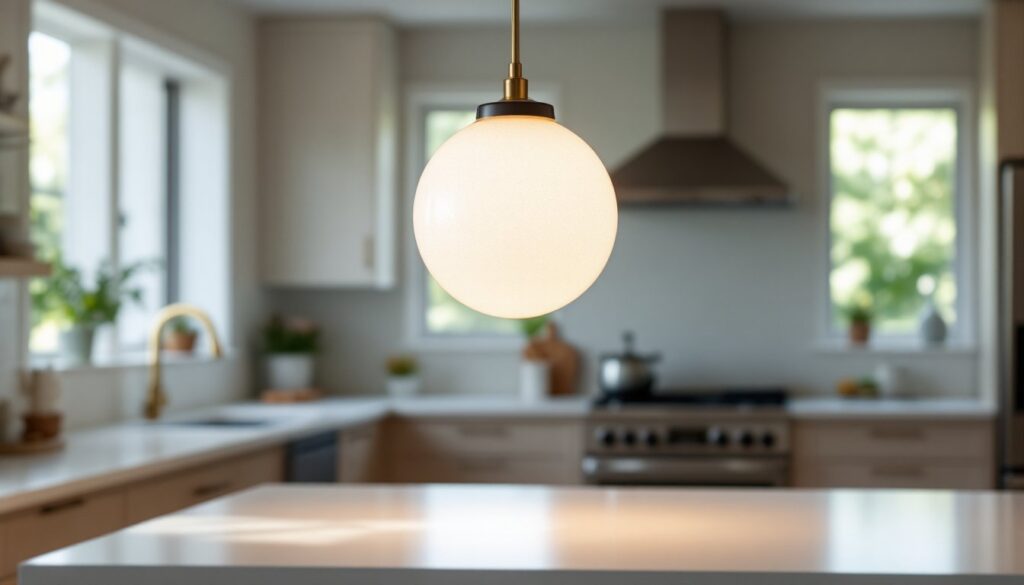
ToggleSeeded glass pendant lighting has become a go-to choice for homeowners who want to add both style and substance to their spaces. Unlike smooth glass, seeded glass features tiny air bubbles and irregularities trapped within the material during manufacturing, creating a subtle textured effect that diffuses light beautifully. This diffusion softens harsh shadows and creates a warm, inviting glow that works equally well in kitchens, dining rooms, entryways, or bedside nooks. Whether you’re renovating a space or simply upgrading your fixtures, seeded glass pendants deliver visual interest without screaming for attention. They bridge the gap between industrial and cozy, which is why they’re showing up in everything from farmhouse kitchens to sleek modern lofts.
Key Takeaways
- Seeded glass pendant lighting diffuses light naturally through tiny air bubbles trapped in the glass, creating a warm glow that eliminates harsh shadows and suits kitchens, dining rooms, and entryways.
- The textured surface of seeded glass pendants hides dust and fingerprints better than smooth glass, reducing cleaning frequency while maintaining durability and a sophisticated appearance.
- Seeded glass pendant designs work seamlessly across modern geometric styles and rustic farmhouse aesthetics, pairing well with minimalist hardware or vintage finishes depending on your décor.
- Proper sizing and placement are essential: calculate pendant diameter by subtracting 12 inches from island width, and hang fixtures 30–36 inches above counters to avoid head bumps while maintaining sight lines.
- Choose warm white bulbs (2700K) with seeded glass pendants to enhance their cozy qualities, and install fixtures securely to ceiling joists—never drywall anchors alone—using a non-contact voltage tester for safety.
- Maintain seeded glass pendants with monthly dusting using a soft cloth and occasional glass cleaner, while avoiding harsh chemicals that can dull the finish or damage the textured surface.
What Is Seeded Glass and Why It Works for Pendant Lighting
Seeded glass is created by introducing tiny impurities, usually sodium silicate or other materials, into molten glass during the casting process. These particles remain trapped as the glass cools, forming small bubbles and surface irregularities that catch and scatter light. The result is a softer, warmer light output compared to clear or smooth frosted glass.
Why does this matter for pendants? Pendant fixtures hang at eye level or slightly above, so any harshness in the light they emit becomes noticeable. Seeded glass solves this naturally. Instead of casting a defined shadow, the light bounces through the bubbles and texture, creating what’s often called a “warm diffusion.” You get adequate illumination without the clinical feel of bare bulbs or the heavy reduction of frosted glass.
Another practical advantage: seeded glass hides dust and fingerprints far better than smooth or clear glass. The texture masks minor smudges that would be obvious on a polished surface. Over time, this means fewer cleaning sessions to keep your pendants looking fresh. The durability is the same as any quality glass, it won’t yellow, discolor, or degrade if properly maintained.
Design Styles and Aesthetic Possibilities
Modern and Contemporary Designs
In contemporary spaces, seeded glass pendants work best in geometric or minimalist vessels. Think cylinder shapes, simple spheres, or shallow bowl forms paired with matte black, brushed brass, or chrome hardware. The textured glass keeps the look warm and human-scaled, while clean lines prevent the fixture from feeling busy.
One clever approach: pair a large seeded glass pendant with an open canopy and thin suspension cord or rod. This arrangement draws the eye upward without cluttering the view. For kitchen islands or bar tops, oversized seeded glass pendants (10–12 inches diameter) can anchor the space without blocking sightlines if hung at the proper height (typically 30–36 inches above a counter). Designers featured in sources like Architectural Digest often use seeded glass in muted palettes, soft grays, creams, and neutral metals, to create sophisticated, timeless schemes.
Rustic and Farmhouse Applications
Seeded glass is almost custom-built for farmhouse and rustic aesthetics. Pair it with wrought-iron hardware, oil-rubbed bronze finishes, or weathered wood accents, and the textured glass feels right at home. Cottage-style spaces benefit from this pairing because the imperfections in the glass echo the intentional imperfections (distressed wood, vintage hardware) throughout the décor.
Many farmhouse kitchens group multiple smaller seeded glass pendants (6–8 inches) in a staggered arrangement over an island. This creates visual rhythm and a cozier feel than one large fixture. You’ll also see seeded glass in mason jar-style pendants, Edison bulb cages, or with exposed filament bulbs, the rough texture complements vintage-inspired designs. Resources like Elle Decor showcase how designers use this pairing to achieve authenticity without feeling overly themed.
Choosing the Right Seeded Glass Pendant for Your Space
Start by measuring your space and determining fixture placement. For a kitchen island, calculate the island width and subtract 12 inches: that’s a reasonable guideline for pendant diameter. If your island is 36 inches wide, a 24-inch-diameter pendant or two smaller 14-inch pendants work well. Overhead, aim for 30–36 inches clearance between the fixture bottom and the counter to avoid head bumps and maintain sight lines.
Next, assess your existing hardware finishes. Match pendant hardware (the metal canopy, rod, and chain) to your faucet, cabinet hardware, or light switches. Mixing finishes isn’t forbidden, it’s often intentional, but they should relate to each other. A brushed brass pendant pairs naturally with warm gold tones: matte black works with stainless steel or charcoal accents.
Consider the bulb type. Modern seeded glass pendants accommodate LED, incandescent, or halogen bulbs, but the bulb shape matters. A globe or A19 bulb will show through seeded glass more visibly than a candelabra or larger soft-white fixture, especially if the glass is very clear. Choose a warm white bulb (2700K color temperature) for residential spaces: it enhances the cozy quality of the seeded texture. Avoid bright white (5000K+) unless you want an intentionally clinical feel.
One more consideration: home styling guides emphasize the importance of scale and proportion. A single oversized pendant can feel dramatic in an open-concept kitchen but overwhelming in a small breakfast nook. Two medium pendants usually offer better balance than one large fixture in most residential settings.
Installation and Placement Tips for Maximum Impact
Before hanging anything, turn off power at the breaker and verify the circuit is dead with a non-contact voltage tester. This is non-negotiable, even if you’re just swapping existing fixtures.
Most seeded glass pendant kits include a mounting bracket, canopy, and hardware. If you’re installing new fixture boxes (rough-in work), ensure they’re rated for the weight of the pendant. A typical glass pendant weighs 2–5 pounds: standard 1/2-inch electrical boxes handle this without issue, but verify your box is anchored securely to a joist or blocking, not just drywall. If you’re installing pendants in an existing hole, the old box should suffice.
Step-by-step: First, assemble the pendant according to manufacturer instructions off-site, this is easier than working overhead. Second, thread wiring through the canopy and chain before installing the mounting bracket. Third, secure the bracket with the provided screws: do not use drywall anchors on their own for ceiling work. Fourth, hang the chain, thread the wires into the electrical box, and make connections using wire nuts (copper to copper, white to white, black to black). Fold the wires neatly into the box.
For placement impact, height is critical. Pendants over islands should hang 30–36 inches above the work surface: over dining tables, 28–34 inches above the table. Too high and the light won’t reach the surface: too low and they obstruct sightlines. If ceiling height is limited (under 8 feet), choose a lower-profile seeded glass design or a single linear track fixture rather than multiple heavy pendants.
For bathroom vanities, a pair of low-profile seeded glass sconces flanking the mirror often works better than overhead pendants. This positioning eliminates shadows on the face during grooming tasks.
Maintenance and Care for Long-Lasting Beauty
Seeded glass requires minimal maintenance, but a few habits keep fixtures looking sharp. Dust the glass monthly with a soft, lint-free cloth, microfiber works well. For fingerprints or buildup, use a glass cleaner (like Windex) and a non-abrasive cloth. Avoid scouring pads or harsh chemicals: they can dull the finish or, in rare cases, etch the glass surface.
Because seeded glass is porous at the microscopic level, it traps dust particles more readily than smooth glass. This isn’t a defect: it’s just part of the aesthetic trade-off. A quick wipe every few weeks prevents dust from becoming embedded and darkening the appearance.
When replacing bulbs, ensure the fixture is off and cool. If your pendant uses a cord-and-chain suspension, gently loosen the chain if needed to bring the fixture to a comfortable working height. Some fixtures have threaded sockets: others have push-in designs. Check your manual to avoid forcing parts.
Over time, if the glass seals are damaged or if internal moisture appears, the fixture may fog internally. This is rare with quality manufacturers, but if it happens, the glass may need replacement (available as a separate part from many fixture makers). The hardware and electrical components typically outlast the glass, so repair is often more cost-effective than replacement.
One final tip: if you install seeded glass pendants near a kitchen stove or high-heat area, they may accumulate grease residue faster. Wipe these fixtures every 1–2 weeks to prevent a grimy buildup that’s harder to remove later.