Table of Contents
Toggle<a href="https://www.bobvila.com/articles/consider-before-installing-recessed-lighting/” target=”_blank” rel=”noopener nofollow”>Recessed lighting transforms a room by creating clean, modern sightlines, but burned-out bulbs and outdated trim don’t look so good. Replacing recessed light bulbs or upgrading to LED fixtures is one of the most straightforward lighting projects a homeowner can tackle. Whether you’re swapping a single bulb or converting an entire ceiling to LED, this guide walks you through the process without overstating the complexity or glossing over the safety details. Most jobs take under an hour per light and require only basic tools. Read on to learn exactly what you’re working with, when replacement makes sense, and how to do it right.
Key Takeaways
- Changing recessed lighting involves identifying the bulb base type (GU10, E26, or MR16), turning off power, and installing the replacement bulb in minutes—a straightforward DIY task for most homeowners.
- LED retrofit kits and bulbs reduce energy consumption by 75–80% compared to halogen or incandescent options and last up to 25,000 hours, paying for themselves in energy savings within a few years.
- Always use a voltage tester before touching any fixture, even with the power switch off, and allow halogen bulbs to cool for 15 minutes to prevent burns and ensure safety.
- Avoid common mistakes such as buying the wrong base type, exceeding maximum wattage ratings, and forcing trim rings—confirm specifications beforehand and use gentle, methodical pressure.
- For IC-rated (insulation-contact) fixtures in damp bathrooms, kitchens, or insulated attics, select fixtures designed for those conditions to prevent heat loss and fire hazards.
- When wiring or housing concerns arise beyond simple bulb replacement, call a licensed electrician rather than attempting complex fixture upgrades yourself.
Understanding Recessed Lighting Basics
Recessed lights sit flush with the ceiling, the fixture is mounted inside a housing that’s hidden above the drywall. What you see from below is the trim ring, a metal or plastic bezel that frames the bulb and sometimes includes a baffle to reduce glare.
There are three main parts: the housing (sits above the ceiling), the trim (the visible ring), and the bulb (holds the light source). Most residential recessed lights use either GU10, E26, or MR16 base types. The base type determines whether your bulb will even fit, getting this right is essential before shopping.
Halogen and incandescent recessed bulbs generate significant heat, which is why housings often include insulation covers and thermal cutoffs. LED recessed lights run cooler and last longer (up to 25,000 hours), making them the practical choice for most homes. If your current fixture uses halogen, you’re likely running hotter and wasting more energy than necessary.
Why You Need To Replace Your Recessed Lights
Burned-out bulbs are the obvious reason, but there are others. Halogen bulbs dim over time and waste electricity compared to LEDs. Old trim rings can look dated or be damaged. Some housings were installed without proper insulation, creating heat loss or even fire risk if not addressed.
LED conversion also cuts energy use by 75–80% compared to older halogen or incandescent bulbs, and LEDs last longer, so you’re replacing them less frequently. If your lighting feels too bright or too warm, swapping to a different LED color temperature (measured in Kelvin) makes a real difference. Recessed lighting housing quality and design also affect whether you can simply swap bulbs or need to upgrade the entire fixture.
Cost adds up fast when you have 10, 20, or 50 recessed lights. Choosing a dimmable LED option upfront saves money later if you want to adjust mood or brightness without rewiring.
Tools and Materials You’ll Need
Essential tools:
• Ladder or step stool
• Screwdriver (Phillips, flathead, or multi-bit)
• Voltage tester (to confirm power is off, non-negotiable)
• Wire strippers (if you’re replacing the entire fixture, not just the bulb)
• Needle-nose pliers (useful for wiring and trim ring removal)
Materials:
• Replacement bulbs or LED retrofit kits (match the base type: GU10, E26, or MR16)
• New trim rings or gaskets if needed
• Wire connectors (usually included with retrofit kits)
• Electrical tape (for securing wire connections)
Safety gear:
• Safety glasses (dust and debris can fall from above the ceiling)
• Work gloves (protect hands when handling fixtures)
• Ensure the power switch controlling the lights is OFF before you start. A voltage tester is cheap insurance, touch the fixture with it while the switch is off to confirm zero volts.
If you’re upgrading the entire fixture or dealing with wiring beyond a simple bulb swap, a licensed electrician is your better choice.
Step-By-Step Guide To Changing Recessed Bulbs
Step 1: Turn off power and let fixtures cool.
Flip the light switch to OFF. Wait at least 15 minutes if the lights were on, halogen and incandescent bulbs get hot enough to burn your hand. Use a voltage tester to double-check that power is actually off.
Step 2: Remove the trim ring (if needed).
Some trim rings pop out with gentle pressure from below. Others have small screws. Gently push up or unscrew, don’t force it. Some fixtures have a spring clip holding the trim: squeeze the clip and the trim falls free.
Step 3: Note the bulb type and wattage.
Look at the old bulb. Is it marked GU10, E26, MR16, or something else? Check the wattage too. You’ll need this information to buy the correct replacement. Write it down, phones make good note-takers.
Step 4: Remove the old bulb.
GU10 and E26 bulbs twist counterclockwise. MR16 bulbs usually push straight in and pull straight out. Don’t apply sideways pressure: straight motion prevents damage.
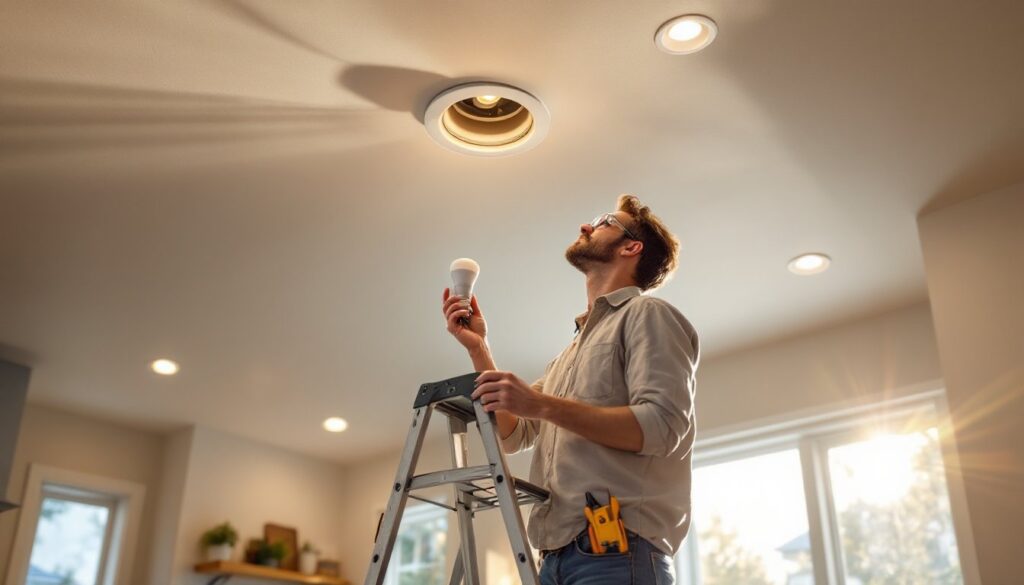
Step 5: Install the new bulb.
If you’re using a new LED bulb in the same fixture, insert it the same way the old one came out. Ensure it’s seated fully. Check that the trim ring sits flush and secure it back in place.
Step 6: Test the light.
Flip the switch back on. The bulb should illuminate. If it doesn’t, turn power off again and check that the bulb is fully seated. If the problem persists and you’ve used the correct base type, the housing itself may be faulty, this warrants a call to an electrician.
For most homeowners, swapping a single bulb takes 5–10 minutes per light. Work methodically and don’t skip the voltage test: it’s the only step that prevents injury.
Switching To LED Recessed Lighting
LED retrofit kits let you upgrade existing housings without replacing the entire fixture, a huge cost and time saver. A retrofit kit includes a new LED trim ring and integrated bulb that screws or clips into your existing housing. You’re essentially swapping out the old trim and bulb as one unit.
Before buying, confirm your housing’s trim diameter (typically 4, 5, or 6 inches). Retrofit kits come in various color temperatures: 2700K (warm, yellow-toned) mirrors incandescent lights, 3000K (neutral white) is popular in modern homes, and 5000K (cool, blueish) works in bathrooms or kitchens. Dimmable models cost more upfront but offer flexibility.
Installation is straightforward. Turn off power, remove the old trim ring and bulb, and install the retrofit kit into the same housing, usually just a few twists and clicks. No rewiring needed unless the housing is damaged. Recessed lighting upgrades pay for themselves in energy savings within a few years, especially if you have many fixtures. Professional retrofitting services exist, but the DIY process is genuinely accessible to anyone comfortable on a ladder.
Common Mistakes To Avoid When Changing Recessed Lights
Skipping the voltage test. This is how people get hurt. Even if the switch is off, there’s always a small chance the wiring is live. A $10 voltage tester takes the guesswork out.
Buying the wrong base type. E26 won’t fit a GU10 socket, and MR16 won’t fit either. Take a photo of the old bulb or write down the base type before leaving home.
Using the wrong wattage. Recessed fixtures have maximum wattage ratings (often printed inside the housing). Exceed it and you risk overheating or a fire hazard. If the housing maxes out at 50W and you install a 65W LED, you’ve created a problem. LED wattage is lower than equivalent incandescent, but still check the spec.
Ignoring damp or insulated ceilings. If your bathroom or kitchen ceiling has moisture or your attic has insulation touching the housing, a standard fixture may not be rated for those conditions. Look for IC-rated (insulation-contact) recessed lights if your situation calls for it.
Forcing the trim ring. Gentle pressure and patience beat brute force every time. If a trim ring won’t budge, look for a hidden screw or clip you missed.
Not letting halogen cool. 15 minutes minimum. Touching a hot halogen bulb can cause blisters. Your future self will thank you for waiting.
Most of these mistakes are preventable with a five-minute read of the fixture label and a bit of patience. How to replace recessed lighting guides from reputable sources confirm these same points, and following them will save you frustration.
Conclusion
Changing recessed lighting is a quick, low-risk DIY project that yields immediate results. Whether you’re replacing a burned-out bulb or upgrading to LED retrofit kits, the core process is the same: confirm power is off, identify the bulb type, and swap it out. Taking 10 minutes to confirm the right base type and wattage upfront prevents wasted trips and frustration. LED conversion cuts energy costs and lasts years longer than older bulbs, so the upgrade pays for itself fast. When in doubt about wiring or insulation concerns, call a licensed electrician, knowing when to bring in a professional is part of smart DIY.